Golden Ratio Photography: Grids, Spirals, and Composition Tips
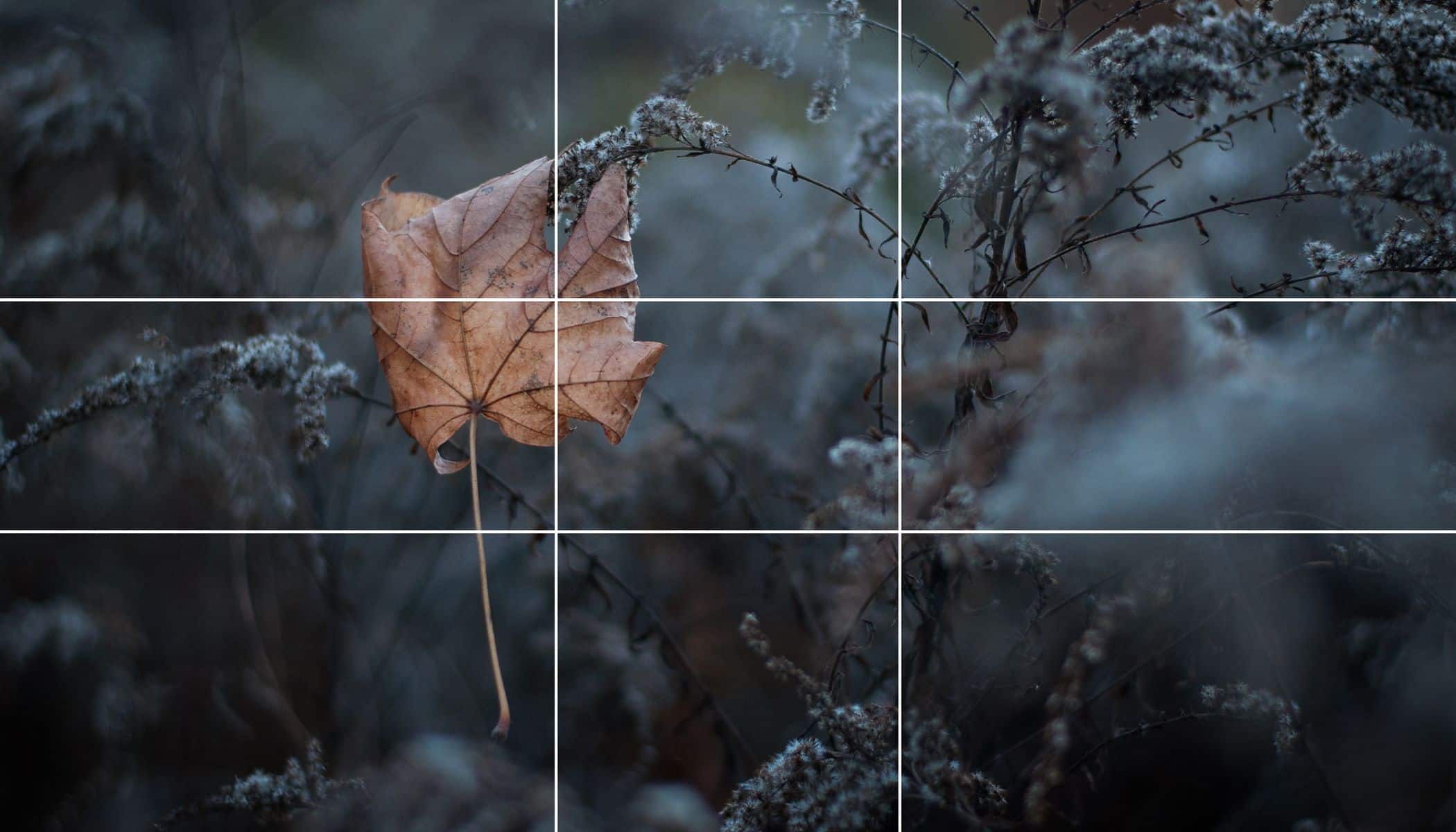
The golden ratio is one of the most well-known composition principles in photography. But how do you use it in practice? We’ll show you how to work with the golden ratio grid and the Fibonacci spiral—and when it’s better to trust your intuition.
In this article, you’ll learn:
- What the golden ratio is and why it appears natural.
- How the golden ratio grid and Fibonacci spiral work.
- How to position your main subject in the frame.
- How to use leading lines and curves.
- Why you don’t need to follow composition rules at all costs.
Before diving into the golden ratio, it helps to clarify one thing: every photograph is based on proportions. Proportions describe the relationships between elements in an image—how much space the main subject occupies, how much empty space remains around it, where the image is visually dense, and where it has room to breathe.

As an exercise, ask yourself: Is the subject too close to the edge, or is there enough space around it? Is the image balanced, or does one part dominate? Does the scene feel calm, or is there tension?
The golden ratio is one way to arrange elements so the image feels balanced. Artists already knew this thousands of years ago.

History of the golden ratio: From pyramids to photography
The golden ratio existed long before the invention of the camera. It was used by ancient builders and appears in famous works of art, such as the Mona Lisa or The Last Supper.
Ideas about harmonious proportions began to emerge in Ancient Greece. Mathematicians and philosophers noticed that an uneven relationship between the parts often appears more natural than equal divisions of halves or thirds. Today, we refer to this relationship as the golden ratio (phi, ϕ), with a ratio of approximately 1:1.618.
In practice, this means dividing an image into unequal parts with larger and smaller sections that still feel balanced together.


© Ester Dobiášová
Fibonacci spiral in photography
One of the most well-known representations of the golden ratio is the Fibonacci spiral. It’s created by placing rectangles next to each other and connecting them with a smooth curve. The result is a spiral that unfolds outward from a single point and guides the viewer’s eye through the image.

A similar pattern appears in nature—in seashells, ferns, sunflower seeds, or plant growth. You can even observe a comparable curve on the human body. For instance, a clenched fist when viewed from the side.
In photography, the spiral helps position the main subject at the point where the curve tightens, while other elements lead the viewer’s eye through the scene.
Golden ratio grid vs. Spiral: What’s the difference
Both approaches can improve composition. Choosing the right one depends on the scene.

Step 1: Examine the scene
How you use the golden ratio depends on the scene in front of you. Before pressing the shutter button, consider which composition is best suited for the scene.

Ask yourself the following questions:
- What is the main subject? That’s where you want to direct attention.
- Are there leading lines or natural curves? Leading lines work well with a grid, curves with a spiral.
- What else is in the scene? Do they distract from the subject or support it?

Step 2: Compose and shoot
If your camera doesn’t offer a golden ratio composition grid, use the rule of thirds as a guide.
Choose where the composition begins and place the main subject near an intersection point. For portraits, this is typically the eyes. For the rule of thirds, this is closer to the center of the image.

If your camera supports a golden ratio grid, position the subject either at an intersection or at the tightest point of the spiral.
When working with the golden spiral, the subject often ends up closer to the edge of the frame. Adjust the composition based on leading lines or curves in the scene and place secondary elements along the grid lines or spiral.


Why the golden ratio works and when to break it
The golden ratio is a subtle way to achieve balance, helping images feel natural and calm. It’s useful to understand, especially for beginners—but it’s not something you need to follow strictly. As you gain experience working with space, direction, and visual tension, you’ll apply these principles more intuitively.
FAQs
What is the golden ratio in photography?
It’s a composition principle that divides an image into balanced parts using a ratio of approximately 1:1.618. It helps place the main subject so it appears natural and balanced.
What is the difference between the golden ratio and the rule of thirds?
The rule of thirds divides the image into three equal parts, while the golden ratio uses an uneven ratio. The golden ratio feels more subtle and natural, but it’s harder to apply.
What is the Fibonacci spiral?
It’s a visual representation of the golden ratio used to guide the viewer’s eye toward the main subject.
Do I need to use the golden ratio in every photo?
No. It’s a guideline, not a strict rule. In many situations, intuition or other composition techniques work better.
How can I use the golden ratio when shooting?
Some cameras offer a golden ratio grid, but the rule of thirds is more common and works as a rough guide. The key is to understand the relationships between different elements in the scene.
When should I use a spiral instead of a grid?
Use a spiral for scenes with natural curves and movement. Use a grid for straight lines and static scenes.