How to Shoot in Square Format: Tips and Benefits
A square photograph is not just a cropped rectangle. With a 1:1 aspect ratio, it changes the way we work with composition, symmetry, rhythm, and negative space. In this article, I’ll show you how photographers like Vivian Maier and Roman Franc have come to love the square format, how it influences the way they perceive their images, and how you can master square composition—even if your camera only shoots in a rectangular format.
In this article, you’ll learn:
- Why the square format concentrates action into a smaller space and how this changes the way we perceive the subject.
- How square composition works for portraits, photojournalism, and calm, enclosed scenes.
- Why symmetry is the natural language of square composition.
- How to visualize a square while shooting, even if your camera’s viewfinder doesn’t show one.
- Which photographers are the best sources of inspiration for mastering the square format.
The square format has a long history in photography. It became especially popular with Rolleiflex medium-format cameras, which used 6×6 cm film. Later, it appeared in simpler cameras, and with the rise of social media, it once again entered the public sphere.
Square photography’s long history shows that it isn’t a passing fad, but a distinct format with its own unique narrative style.
Concentrate the action using square format
While more common aspect ratios like 4:3 or 3:2 (which I simply refer to as rectangular formats) naturally guide the eye horizontally or vertically, square format doesn’t favor any specific direction. Instead of moving linearly across the image, the viewer’s gaze tends to return and circle around the subject.
The square format concentrates the action into a small space, creating a sense of density in the image. The simpler the subject, the more important the use of negative space becomes. It’s the negative space that determines whether a square photograph works or not.


Does this photograph work better in rectangular or square format? © Ester Dobiášová
As photographers, you have to think about what holds an image together. Square format isn’t forgiving if you don’t know what your main subject is. It tends to be particularly effective in calm, enclosed images. The viewer stays in the frame, noticing details, the relationships between elements, and subtle differences in tone or light. Sometimes it is this apparent simplicity that paves the way for more powerful photographs.

However, because a square confines action within a fixed frame, it can also concentrate a very lively, action-packed scene into a tight space, as you can see in the work of street photographer Vivian Maier. Her extensive collection of primarily street photography from Chicago, New York, and other U.S. cities captures streets, people, architecture, and dynamic moments that often feel like little stories within a single frame. She used a medium-format Rolleiflex, which produces a square negative and allows for rich image detail.
How square format changes how we perceive the subject
What might serve as a secondary element in a rectangle can take on a leading role in a square. Lines, textures, repetition, or subtle differences in proportions become far more visible and significant than the direction of the narrative itself.


The simpler the subject, the easier the decision. A diagonal composition can also work great here. © Ester Dobiášová
At the same time, square format appears more compact and often more intimate. The image is self-contained, without anything “escaping.” This enhances the sense of closeness—perfect for portraits, close-ups, or still lifes, where you don’t want the surroundings to distract the viewer.


Both formats work well for this subject; it depends on the photographer’s intention and what they want to convey. A portrait in a square frame conveys a concentrated sense of anger or gloom, creating a certain visual heaviness. A rectangular format softens the emotion and lets the viewer step back from it. As the photographer, I would choose a rectangular format here. © Ester Dobiášová
On the other hand, in narrative or documentary photography, the square format can heighten tension because the viewer can’t look away and remains “trapped” in the scene alongside the subjects.
Square format often lends itself to simplicity, but it can just as easily reveal complex relationships when the image is built on a narrative, rhythm, or interaction. This is beautifully demonstrated by the work of Czech photographer Roman Franc, well known for his photography series. Explore Portrait Series (a cycle in which he captured figures such as Václav Havel and the Dalai Lama), Collectives (filled with people), or his more intimate Brother series.
Square composition: Symmetry, rhythm, and repeating patterns

© Ester Dobiášová
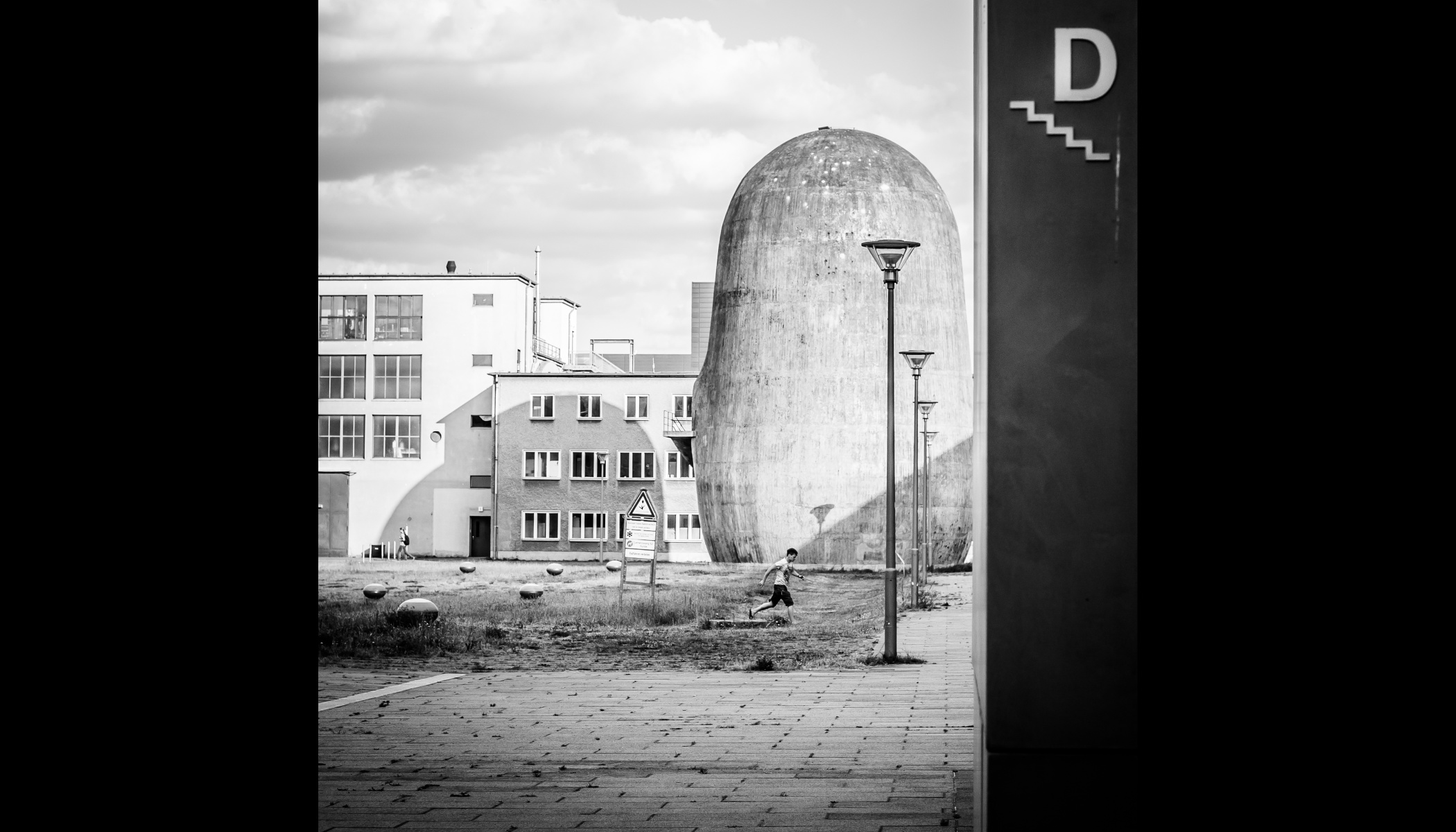
Square, symmetrical compositions convey a distinct sense of calm and stability. After all, symmetry is the natural language of the square format. This doesn’t mean the symmetry has to be perfect—even a slight deviation, like a shadow, adds tension and brings the photo to life.


© Ester Dobiášová
Diagonal composition, repeating patterns, and rhythm also work very well. Square formats give a series of windows, tiles, shadows, or textures a clear, distinct sense of order.

© Ester Dobiášová
How to shoot in square format
Shooting in square format means thinking in terms of a square from the very moment you press the shutter. However, most cameras have a rectangular viewfinder. If your camera’s settings don’t allow you to change the aspect ratio, you need to visualize the square while shooting.
Enabling the rule of thirds grid in your viewfinder can help. You can use two-thirds of the frame—for instance, the left or right side of the viewfinder. This area corresponds to a square format if you’re shooting using a 3:2 aspect ratio.

© Ester Dobiášová
Keep the elements you want in your final photograph within a slightly narrower area than this two-thirds mark. The remaining space can be reserved as a buffer for movement, action, or cropping in post-production.

Photographers who utilize square format
One of the best ways to learn how to work with the square format is to study photographers who have mastered it, such as Vivian Maier or Roman Franc.


© Ester Dobiášová
When looking at their photographs, ask yourself a few simple questions: Where is the image’s focal point? What role does the empty space play? What would happen if the image were stretched into a rectangle? Analyzing images this way helps us understand why the square works—and how it can be used not just as a creative alternative, but as a fundamental way of thinking about photography.
FAQs
Why is square format so unique?
Unlike rectangular formats, a square has no natural direction of viewing. The viewer’s gaze doesn’t move linearly across the image. Instead, it returns to and circles around the subject. This intensifies the sense of action and focuses attention on fewer elements.
Which photographers are well-known for using square format?
Some of the most famous photographers include American street photographer Vivian Maier (who shot using a medium-format Rolleiflex) and Czech photographer Roman Franc, whose series including Portrait Series, Collectives, and Brother prove that square format can handle complex, action-packed scenes.
Is square format suitable for portraits?
Yes. Square format can give a portrait a more concentrated, enclosed feel, which enhances the sense of intimacy. However, it depends on the photographer’s intent. On the other hand, rectangular format softens the emotions and allows the viewer to take a step back.
How do you shoot in square format if your camera doesn’t offer that option directly?
Enabling the rule-of-thirds grid in the viewfinder is a good workaround. You can use two of three sections of the frame, which approximates a square aspect ratio. Keep your main subject within this designated area and leave the rest as a buffer for cropping later.
Which compositions work best in square format?
Symmetrical compositions look most natural in square format, as symmetry is its natural language. Repeating patterns, rhythm, and diagonal lines crossing across the image also work very well.