Lens Review: The Sigma 20/1.4 DG DN Art
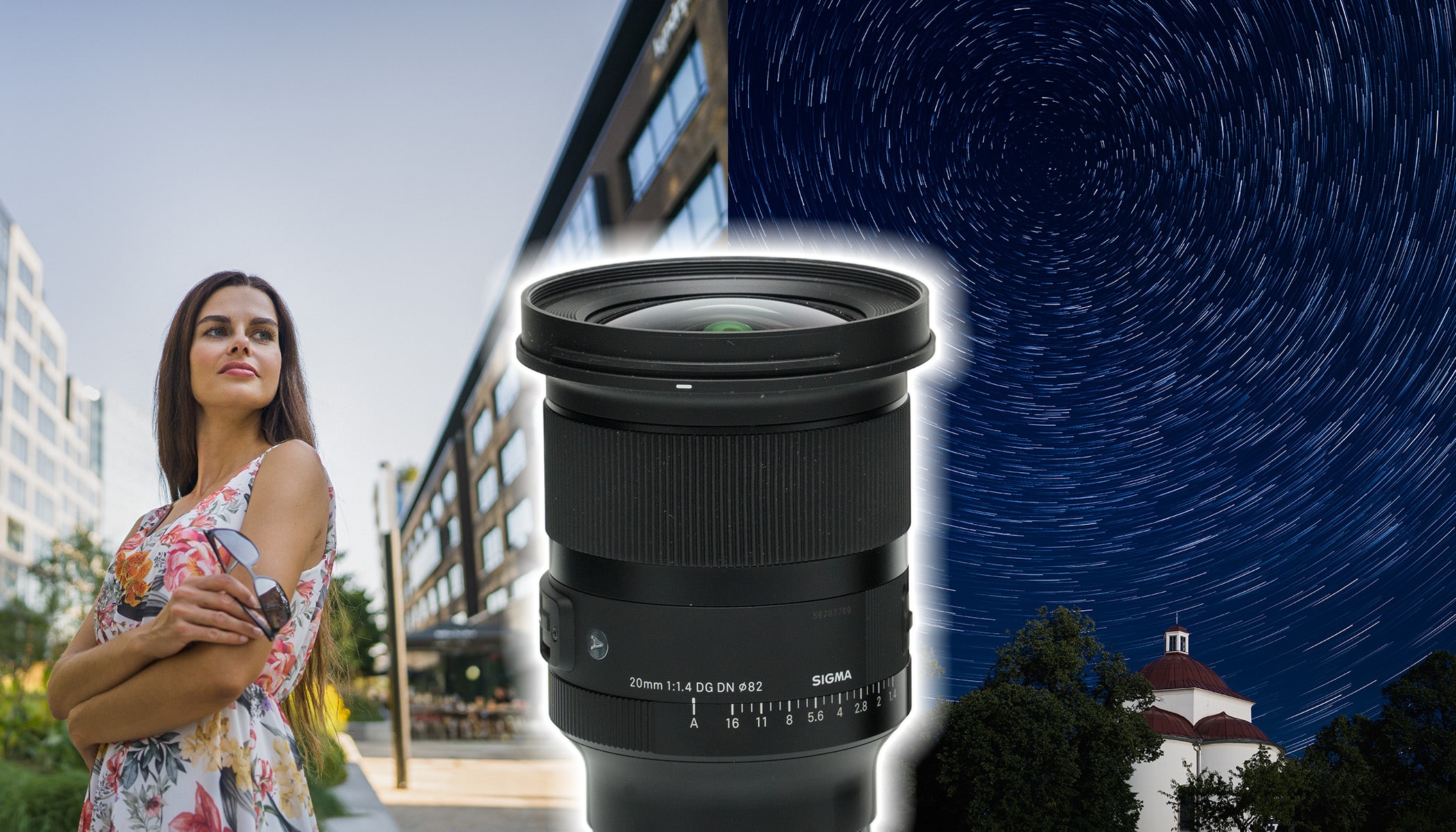
An ultra-wide-angle, ultra-fast lens. This isn’t just a lens for the display case—it’s a genuinely practical tool. That said, it might not be the right lens for every photographer. Find out why I choose it and what my experience has been after using this Sigma lens.
In this article, you’ll learn:
- Why an ultra-wide-angle f/1.4 lens can be a practical tool for photographers.
- What the Sigma 20/1.4 DG DN offers for wedding photography.
- How the lens performs in terms of sharpness, vignetting, distortion, and resistance to lens flare.
- What kind of bokeh you can get even at a 20mm focal length.
- Why the Sigma works well for astrophotography and nighttime landscape photography.
- What unique features this lens offers.
- Who the Sigma 20/1.4 DG DN is best suited for and when it makes sense to buy one.
Even though the title includes the word “review,” don’t take that to mean I simply borrowed the lens for a few days. I bought this lens to keep in my kit, and at the time of writing, I’ve already taken around 1,500 photos with it during actual client shoots.
Why I chose a 20/1.4 lens
In a previous article, I mentioned purchasing the Sigma 35/1.2 for weddings. That’s my main lens, but sometimes I need a telephoto lens (currently the Samyang 85/1.4 II), and a wide-angle lens, which is now the Sigma 20/1.4 DG DN.
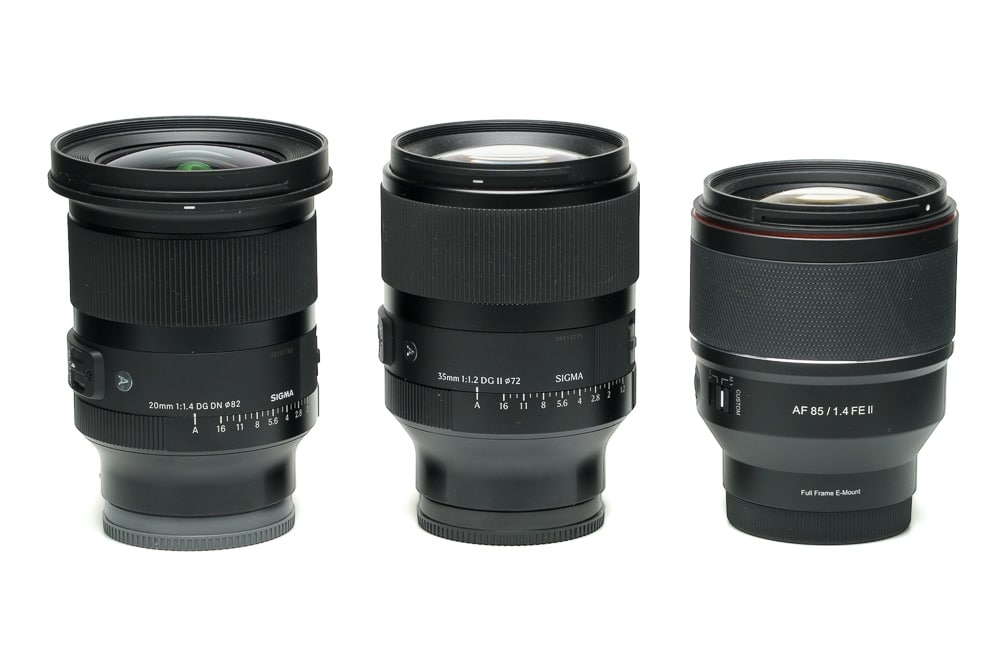
I’ve always carried a wide-angle lens. It used to be a 16-35/2.8 zoom, but compared to fast prime lenses, the greater depth of field is definitely noticeable. I also tried the Sigma 24/1.4, but its angle of view wasn’t always wide enough, so I found myself reaching for something wider for certain shots—often the experimental 12-24/4.
The Sigma 20/1.4 DG DN ultra-wide prime lens solves these problems and serves as my only wider alternative to the 35mm.

It’s even my backup in case something happens to my main Sigma 35/1.2 lens. While the 20mm focal length is significantly wider, I use it on a 60-megapixel camera body, which gives me plenty of room for cropping. Even if I were to crop down to just the center quarter of the image, I’d get a very similar result to what a full-frame camera with a 40/2.8 lens would produce (with the same depth of field and light-gathering ability, but a smaller dynamic range). I’d be left with a 15-megapixel image, which is still quite a lot for many purposes.

Ultra-wide + fast lens = a rare combination
While there are plenty of standard 50/1.4 lenses for full-frame cameras from numerous manufacturers, the situation is different at wider focal lengths. There are still dozens of 35/1.4 options, but 24/1.4 lenses are now made only by a select number of manufacturers. When it comes to 20/1.4, there are currently only two options: Sigma and Canon. There are also a few 21/1.4 options from other manufacturers.
Sigma is something of a pioneer in this field, and the current Sigma 20/1.4 DG DN Art is actually its second version, even though it doesn’t have a Roman numeral II in its name, as you might expect. Its predecessor was the Sigma 20/1.4 DG HSM Art, designed for full-frame DSLRs. The “DN” suffix on the newer lens indicates that it’s intended exclusively for mirrorless cameras.
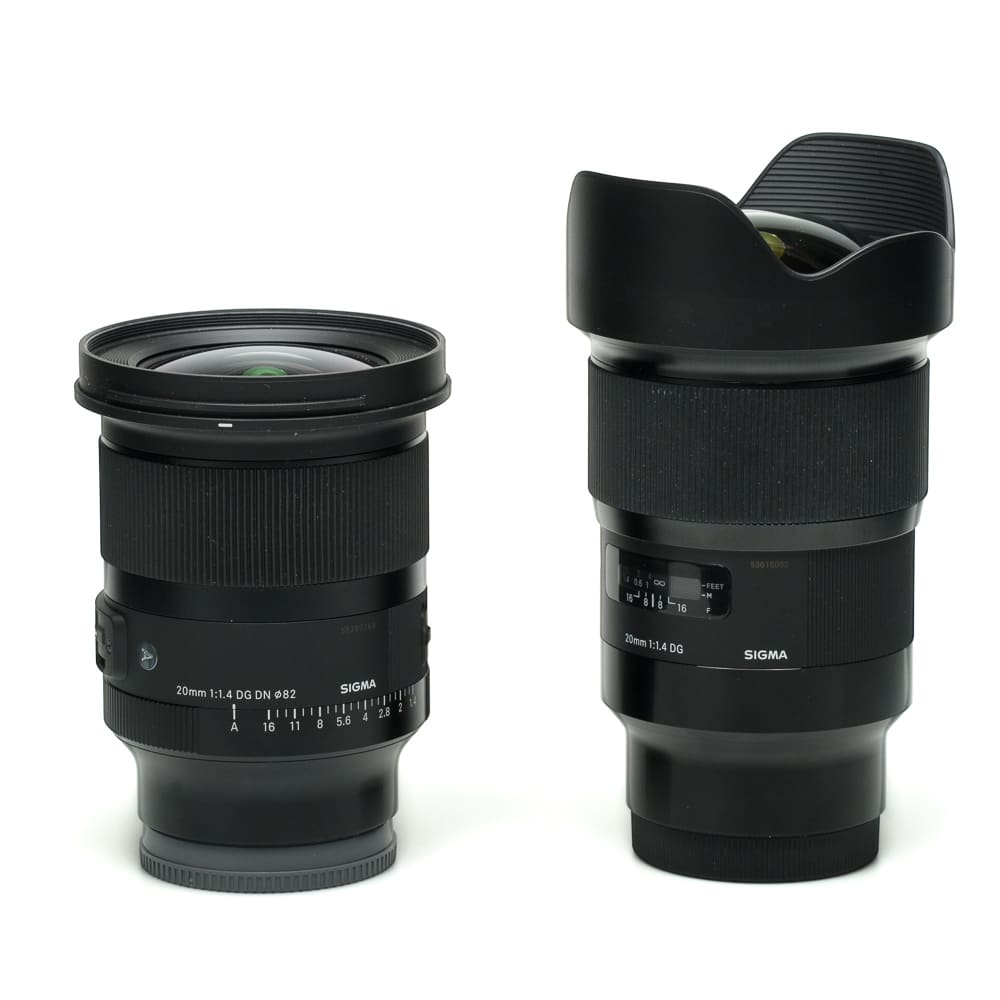
Designing the lens specifically for mirrorless cameras clearly made things easier, and the difference in appearance between the two versions is significant. The new lens is lighter (630 g versus 950 g), shorter (113 mm versus 130 mm), and, importantly, the protruding front element that previously prevented the use of filters is gone. The new version has a standard 82 mm filter thread.
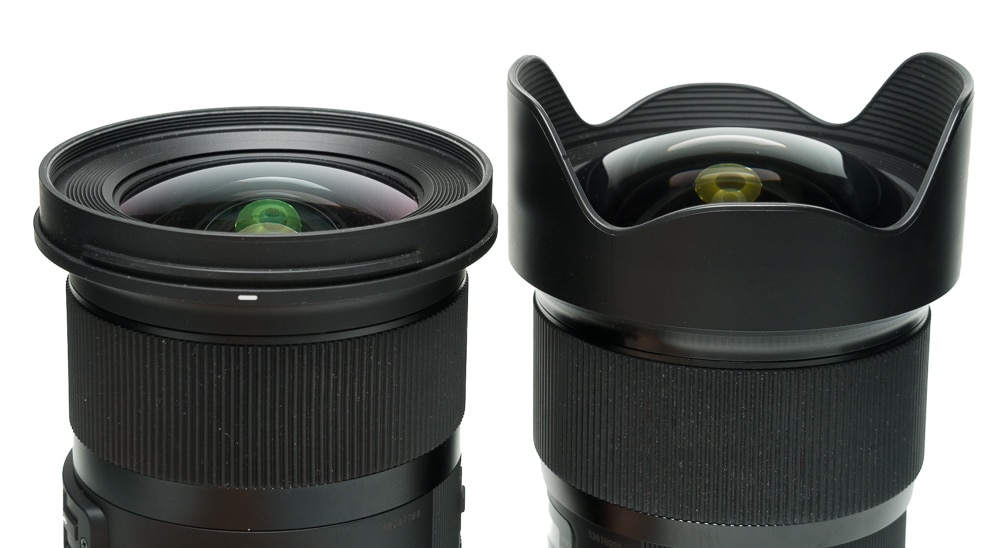
Image quality meets expectations
The image quality is on par with what you’d expect from high-end lenses, although some minor optical imperfections have been accepted to save weight.
Sharpness is very good, and resistance to lens flare is decent as well. This is particularly important for ultra-wide-angle lenses, since the sun is either in the frame or very close.
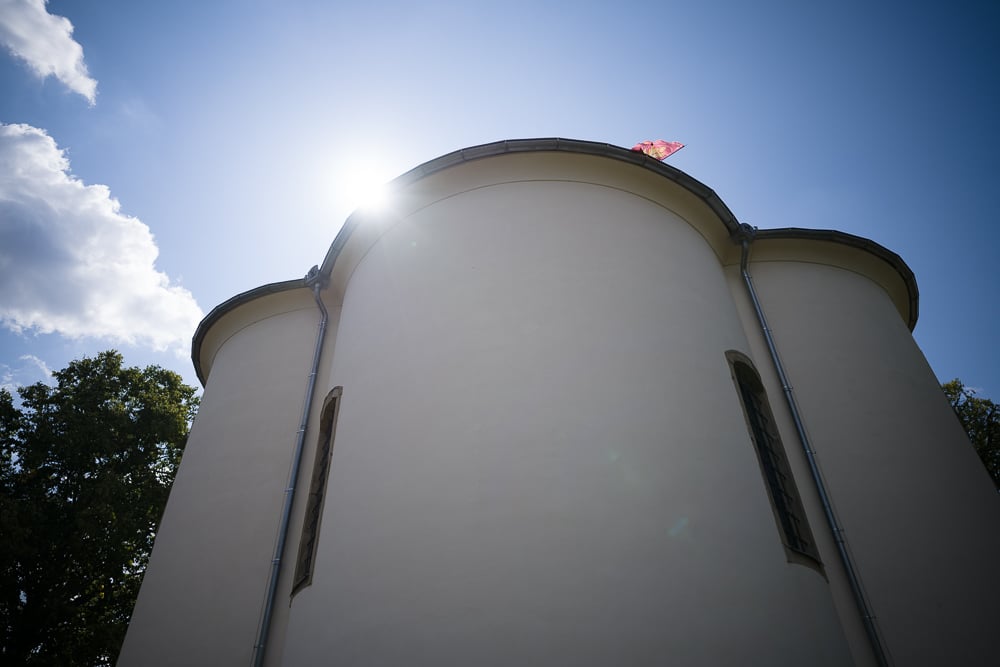
On the other hand, vignetting is quite extreme, exceeding 3 EV in the corners. Since I also own the previous version of the lens, it’s easy to see the new model represents a noticeable deterioration in terms of vignetting.


The new version of the lens (left) has more vignetting than the previous version (right). Both photos were taken at f/1.4.
This is clearly a result of the effort to make the lens smaller. Sigma’s designers had to decide which features were most important, and weight and filter compatibility won out. Vignetting is a common trade-off, not just with this lens, but with many others as well.
There is also some slight barrel distortion. Although prime lenses generally perform better in this regard than zoom lenses, ultra-wide-angle lenses are in a league of their own. Distortion is more common at very wide focal lengths than it is with telephoto lenses.
Bokeh and macro
For me, a blurred background is one of the main reasons to use this lens, and it certainly doesn’t disappoint. Even with such wide shots, you often get lovely bokeh that beautifully separates the subject from the background.
During my experiments, I also discovered that the lens can be used for “light macro” photography. Its maximum magnification is only 1:6.1, compared to 1:1 on true macro lenses. Still, close-ups are striking because the background falls out of focus so quickly.


Astrophotography
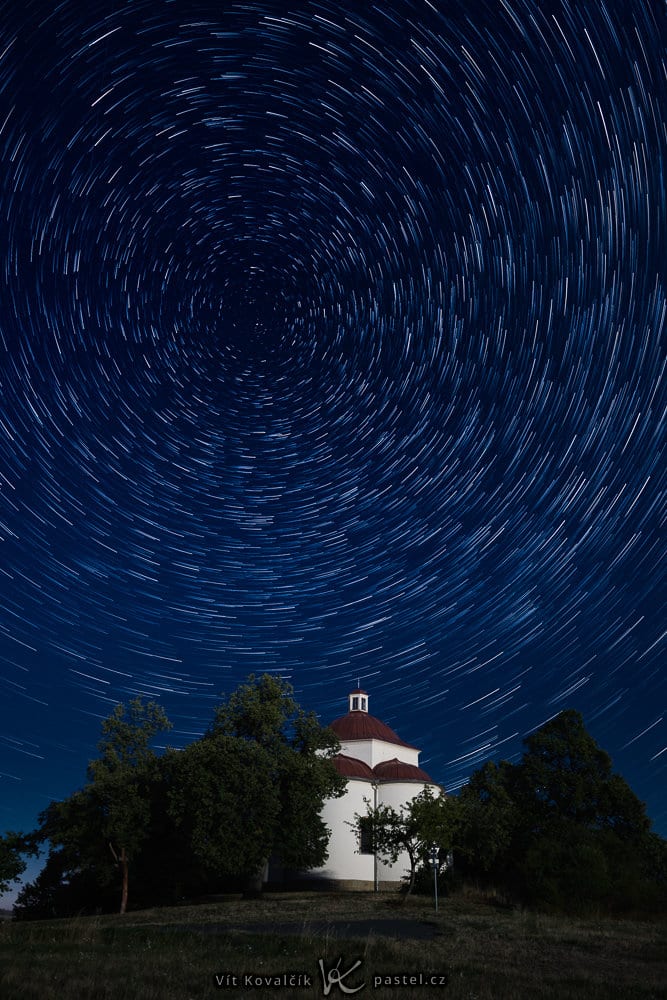
Another genre where this lens really shines is night-sky photography. Because the Earth rotates fairly quickly, shooting long exposures isn’t easy. Within just a few seconds, the stars turn into streaks, so a fast aperture helps you capture as much of that night sky as possible before that motion becomes noticeable.
Compared with an f-number of f/2.8, an f/1.4 aperture lets you capture the same amount of light in just one quarter of the time. There’s a major difference when photographing the Milky Way. You can capture in 15 minutes what would otherwise require an hour.
Unfortunately, I haven’t yet had the right conditions for Milky Way photography, so instead, I have an example of light trails I composed from 116 images, each with a 13-second exposure. The chapel is illuminated by moonlight, with the Moon behind me.
Special features
The Sigma 20/1.4 is full of surprises, one of which is the rear filter holder. You can cut your own gel ND filters at the back of the lens, eliminating the need for large filters on the front.
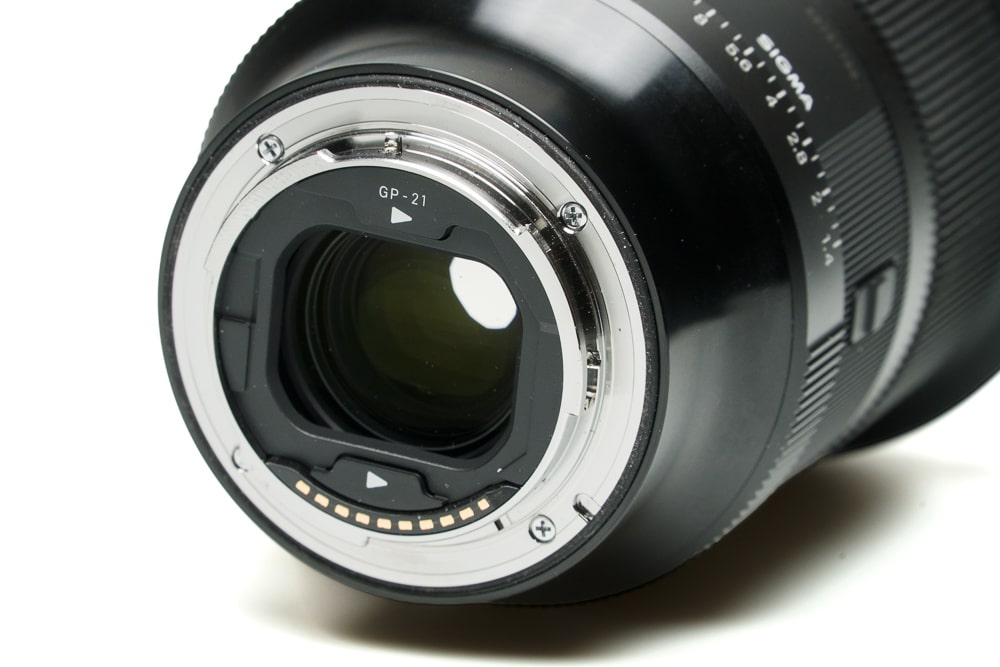
Unfortunately, these filters don’t come standard. To be on the safe side, I tried using a set of rear filters I purchased separately for the Sony 12-24/4 lens I reviewed previously. Unfortunately, they weren’t compatible.
However, there are no issues with using front filters. Even the fairly thick Revoring, which combines a polarizer and an ND filter, didn’t cause any additional visible vignetting. That is, beyond the massive vignetting the lens already produces without a filter.
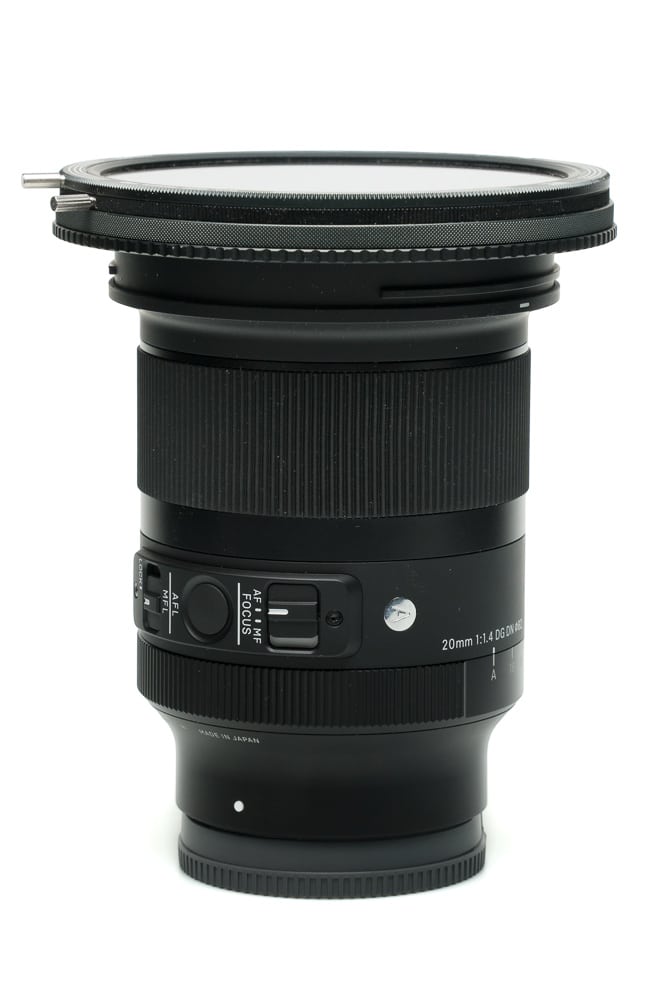
There’s a second peculiarity with the front filters. The lens has a noticeable bulge at the front, which unfortunately makes it take up more space in a camera bag. However, the first lens element clearly isn’t the cause, since it’s located behind the protruding section. So what is the extra bulge for?
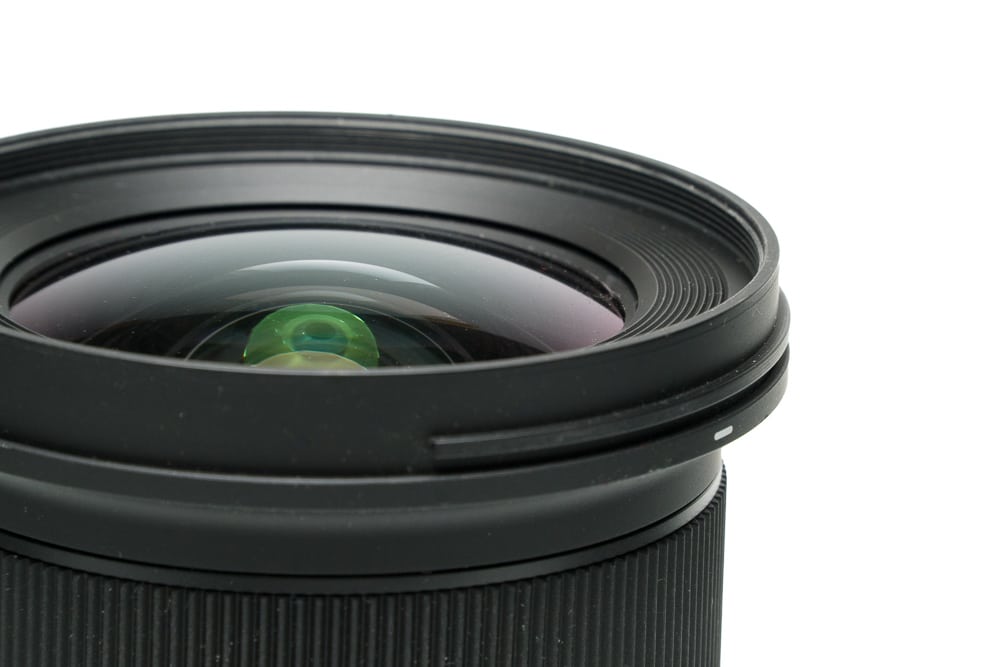
The main reason is probably to accommodate wider filters without causing the corners of the image to darken. Sigma has offered another explanation: the Lens Heater Retainer. This is designed to hold a heater in place and prevent the front element from fogging up when temperatures drop. The heater is essentially a strap around the lens, and the protrusion likely prevents it from sliding too far forward and ending up in the frame.
Weddings and the night sky
I’m very happy with the Sigma 20/1.4 DG DN. It does exactly what I bought it for at weddings, and I’ve also discovered several other situations where it comes in handy.
Whether this lens is right for you is something you’ll have to decide for yourself. It certainly isn’t the first lens I’d buy, but when paired with another, more versatile zoom lens, like a 28-200 or a 35-150, it’s a very powerful combination that can handle a wide range of situations.
FAQs
Who is the Sigma 20/1.4 DG DN for?
It will most likely be appreciated by photographers who specialize in weddings, landscapes, architecture, or night-sky photography. With its f/1.4 maximum aperture, it lets you get images with a pronounced sense of depth, even at an extremely wide angle of view.
What are the main advantages of the Sigma 20/1.4 DG DN lens?
Its greatest strengths include a fast f/1.4 aperture, excellent sharpness, lower weight compared to the previous generation, support for standard 82mm filters, and strong performance in astrophotography.
Are there any drawbacks to this lens?
Yes. The most noticeable drawback is strong vignetting at f/1.4 and slight barrel distortion. However, both can be easily corrected in photo editing software.
Can standard filters be used with this lens?
Yes. Unlike the older version, the lens features a standard 82mm thread for front filters. It also includes a holder for rear gel filters.
Is the Sigma 20/1.4 DG DN suitable for astrophotography?
Yes. The combination of a 20mm focal length and f/1.4 aperture allows for faster shutter speeds, helping you capture the stars without noticeable motion.
Can the Sigma 20/1.4 DG DN replace a standard lens?
Probably not. It’s a specialized ultra-wide-angle lens that works best alongside a more versatile lens, such as a 35mm prime or a fast zoom lens.