

Master the Rule of Thirds for Better Photos
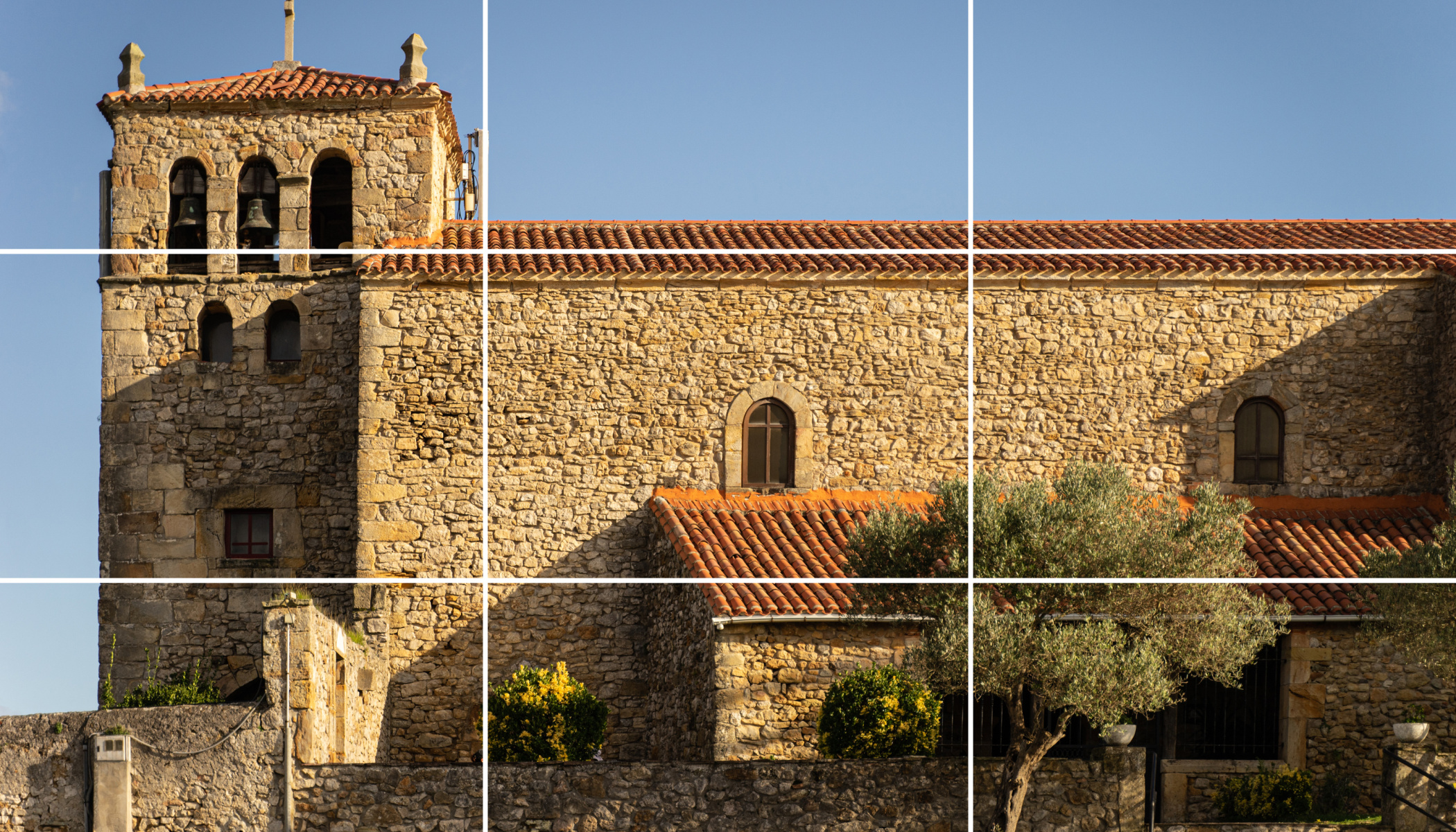
The rule of thirds is one of the simplest ways to instantly improve your photo composition. With the help of a simple grid, it helps you position the horizon, subjects, and architectural elements for images that feel balanced and naturally guide the viewer’s eye. In this article, I also give tips on when it’s worth intentionally breaking the rules and when other approaches, such as the rule of fifths, or simply trusting your instincts, can give even stronger results.
In this article, you’ll learn:
- What the rule of thirds is and how a 3×3 grid works.
- How the rule of thirds differs from the rule of fifths.
- How to position the horizon when photographing landscapes.
- How to use negative space in portraits and when photographing moving subjects.
- How to apply the rule of thirds in architecture and urban photography.
- Why it’s important to master the rules before learning when and how to break them.
The rule of thirds is one of the best-known composition rules. For many photographers, it’s one of the first techniques they learn when they begin intentionally composing images.
The rule of thirds is based on a 3×3 grid that divides the frame into nine equal sections. Two horizontal and two vertical lines create four intersection points where the viewer’s eye is naturally drawn first. Placing your subject or other important elements near these lines or intersections often results in a more balanced and engaging composition.
In addition to the rule of thirds, some photographers also use the rule of fifths. While the rule of thirds is simpler, more intuitive, and suitable for beginners, the rule of fifths offers more flexibility when balancing elements within the frame. Both approaches help you understand the relationship between your subject and its surroundings.


It’s entirely up to you which parts of the image you want to emphasize more. Here, the scene lends itself naturally to a composition based on fifths rather than thirds. © Ester Dobiášová
Practical tool: The composition grid
Most cameras and smartphones let you enable a composition grid based on the rule of thirds. You can usually find this option in the display settings or camera menu.
The composition grid is especially helpful when you’re just starting out. Pay attention to where you position your subject and experiment with placing it along the grid lines or at their intersections. Notice how even a slight adjustment can completely change the balance and mood of an image.
As you gain more experience, you’ll start seeing these compositional relationships without relying on the grid, and you may end up turning it off.

Directing the viewer’s eye: Left to right, top to bottom—and back
The rule of thirds is typically used when photographing landscapes, side-view portraits, or subjects that are “going somewhere.” I suggest using scenes where something is happening—or about to happen. It is precisely this relationship that often tells the story of your photograph.
For viewers accustomed to reading from left to right, the eye naturally moves from left to right and top to bottom. Just like with text, we “read” a photograph in this way—we begin at the left, continue across the main subject, and exit the image on the right.


Which photograph “reads” more naturally to you? © Ester Dobiášová
Notice how differently an image feels when a person or animal has space in the direction they’re looking or moving. Looking into open space creates a sense of calm and anticipation. The eye has somewhere to go, making the composition feel open rather than confined. This sense of harmony can also be deliberately disrupted if that’s the effect you’re after.

The rule of thirds in landscape photography
Landscape photography is where the rule of thirds is used most often, primarily when deciding where to place the horizon. Positioning the horizon along the upper third gives more space to the ground. This works well when the structure of the landscape is important—the lines of fields, a road, or the texture of snow, water, or grass. The image feels grounded and emphasizes the connection to the space beneath your feet.


© Ester Dobiášová
On the other hand, placing the horizon in the lower third emphasizes the sky instead. This works when the sky itself is the focus of the scene: dramatic clouds, colorful sunsets, fog, or approaching storms. A centered horizon tends to split the image in half and weaken any tension, unless there’s a clear reason for it. Photographs like this tend to come off as boring.
When deciding where to place the horizon, ask yourself one simple question: What’s the most important element in the scene?

The rule of thirds for portraits with negative space
The eyes are a natural focal point, and their position significantly influences the overall composition of the photograph. The space surrounding your subject is just as important. Negative space can be a powerful storytelling tool, suggesting anticipation, movement, uncertainty, or even the end of a journey.

For example, if someone is walking to the right and you intentionally leave space behind them on the left, this creates tension—suggesting they’re leaving something behind or being followed. On the other hand, leaving generous space in front of the gaze or movement creates a sense of openness and continuity. Open space in front of the subject’s gaze suggests direction and the future, and gives both them and the viewer room to breathe.


Further reading: Portrait Backgrounds: The Most Common Composition Mistakes
The rule of thirds in architecture and city photography
Architecture and urban scenes provide strong lines, repeating patterns, and visual rhythm. Placing an off-center focal point gives the viewer more space to explore the relationships between the different elements in the frame. A building, sculpture, or striking architectural detail placed at one of the rule-of-thirds lines naturally draws attention without making the image feel closed off. Lines created by facades, sidewalks, or windows naturally guide the viewer’s eye through the scene.

From rules to intuition
More than anything, the rule of thirds teaches you to see space differently. It helps you recognize the relationship between your subject and its surroundings, between positive and negative space, balance and tension. Once these relationships become second nature, you can combine different composition techniques or ignore them entirely. Composition isn’t a set of rigid rules—it’s a visual language that helps you tell a story through your photograph.
Even a central composition isn’t wrong! Read more in the article Central Composition in Photography: Tips, Tricks, and Inspiration for Portraits, Architecture, and Landscapes.
FAQs
What is the rule of thirds?
The rule of thirds is a composition principle that divides a photograph into nine equal sections using a 3×3 grid. Place your subject or other important elements along these lines or at their intersections, where the human eye naturally looks first.
How do I turn on the composition grid on my camera?
Most cameras and smartphones let you display a rule-of-thirds grid in the viewfinder or on the screen. You can usually find the option in the display settings or camera menu.
Where should I place the horizon according to the rule of thirds?
Place the horizon along the upper third when the foreground and landscape’s texture is the main point of interest. Place it along the lower third when you want to emphasize the sky—for example, when there are dramatic clouds or a sunset. Unless you have a specific creative reason, avoid centering the horizon, as it tends to weaken the composition.
How do I apply the rule of thirds to portraits?
Try placing your subject’s eyes along one of the horizontal lines, and leave space in the direction they’re looking or moving. The open space gives the image a sense of direction and suggests that the story continues.
Do I always have to follow the rule of thirds?
No. The rule of thirds is an excellent foundation for learning to perceive the relationship between the subject and its surroundings. As your skills develop, you can combine it with other composition techniques, such as the rule of fifths, or deliberately break the rules for your desired effect.


There are no comments yet.