

Where to See and How to Photograph the 2026 Solar Eclipse
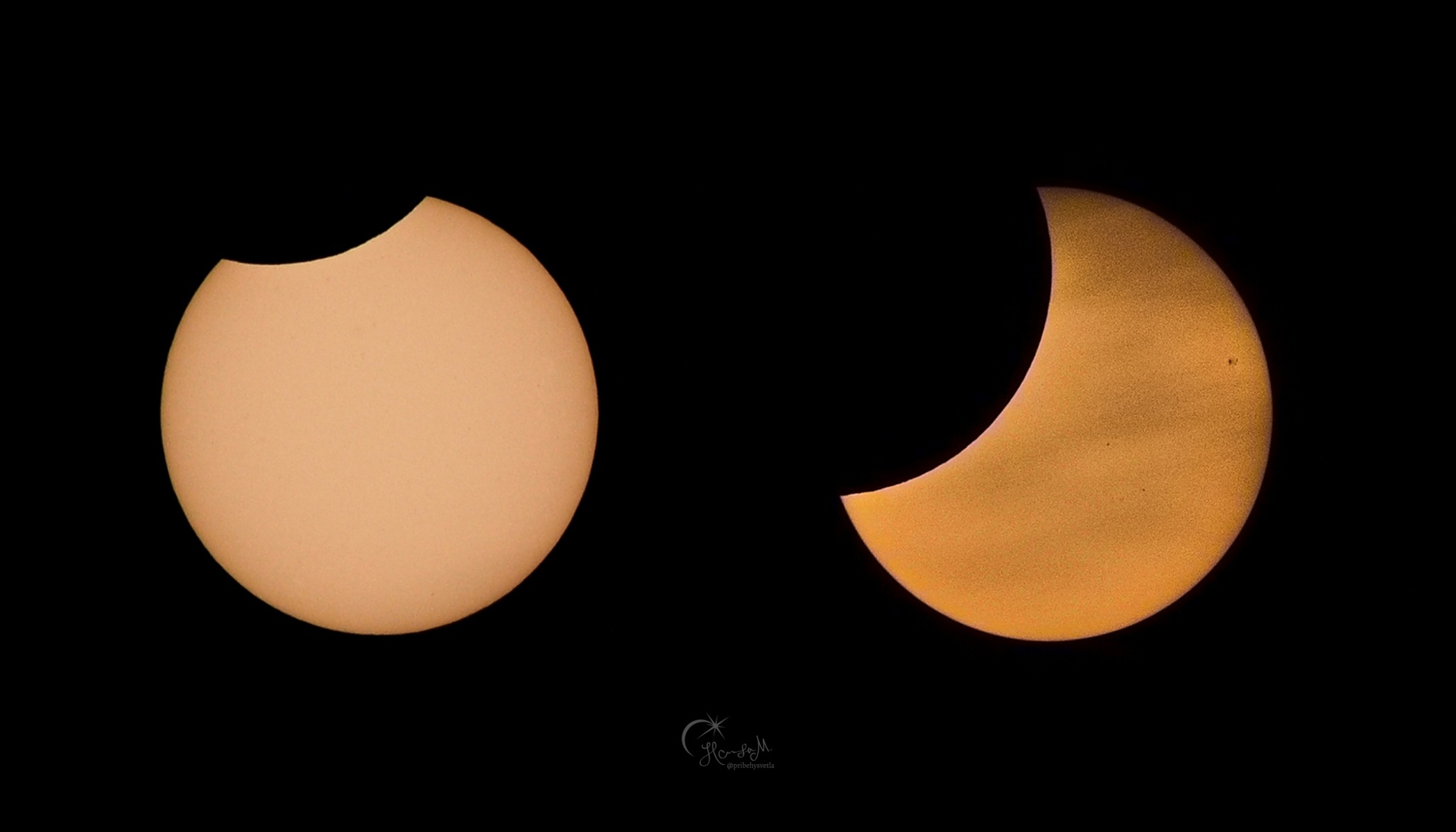
On Wednesday, August 12, 2026, an exceptionally dramatic solar eclipse will take place. It will be visible as a partial eclipse across a wide area of Europe and even as a total eclipse along a narrow pass of totality. I’ll show you how to find the best viewing locations, how to safely protect your eyes and camera, and how to set up your equipment for stunning photos or time-lapse footage. Also, since the Perseid meteor shower peaks on the same night, it’s worth planning a photography session that lasts from sunset well into the night.
In this article, you’ll learn:
- How to find out when and where the solar eclipse on August 12, 2026 will be best visible in your area.
- How to safely observe the Sun without damaging your eyes or equipment.
- How to set up your camera for photos and time-lapse sequences.
- Which lens to choose for landscapes or close-up shots of the Sun.
- What to watch out for to prevent sunlight from damaging your camera sensor.
Best viewing locations for the 2026 Solar Eclipse
This year’s eclipse will be exceptional in many places, mainly because the eclipse maximum will occur close to sunset. As a result, the success of your observation will largely depend on your view of the horizon in the direction of the Sun at the moment of eclipse maximum. The exact position of the Sun will vary depending on your location, so be sure to check the exact direction, timing, and percentage of coverage for your area in advance using an online eclipse calculator.
If possible, choose a hill, observation tower, or another location with an unobstructed view of the horizon. Even a low forest or an inconspicuous ridge can block the Sun at this critical moment.
The closer eclipse maximum is to sunset, the greater the impact of even small differences in your location. Moving just a few dozen kilometers to the west can mean that the Sun is still relatively high above the horizon during eclipse maximum, while elsewhere the eclipse may already be taking place partly below the horizon.
From a photographic perspective, an eclipse this low in the sky won’t be easy to capture. However, the Sun’s low position is exactly what can create exceptionally striking images when combined with a landscape or prominent landmark on the horizon.
How exceptional will the 2026 solar eclipse be?
Partial solar eclipses aren’t particularly rare—in Europe, we’ve had the opportunity to observe several in recent years. However, this August’s eclipse will be one of the more notable ones because the Sun will be more than 85% covered in many locations.
The path of totality—the area from which the eclipse will be visible as a total eclipse—will pass mainly through Iceland, Greenland, and northern Spain. If you’re outside this narrow path, you will only see a partial eclipse. If you want to experience a total solar eclipse, your next opportunity will come in 2027, when the path of totality will cross southern Spain and northern Africa.

Don’t forget about the landscape
During an eclipse, most people focus on the Sun itself. However, it would be a shame to miss what’s happening around you. As the light fades, the atmosphere of the entire landscape begins to change. Colors become more subdued, temperatures may slightly drop, and the birds often fall silent. Insect activity also changes, and the entire area takes on a special, almost surreal atmosphere.
And one of the most beautiful effects that many people don’t even know about can be found by looking up at the trees. The gaps between the leaves act like thousands of tiny pinhole cameras, and instead of round patches of light, hundreds of tiny crescents of sunlight appear on the ground. It’s a subtle detail that can surprise even experienced observers.
Interesting solar eclipse facts you may not know
The Moon is approximately 400 times smaller than the Sun, but it is also 400 times closer to Earth. Thanks to this coincidence, both objects appear to have nearly the same angular size in the sky, which is why a total solar eclipse is possible.
Total eclipses themselves are not particularly rare—they occur on Earth approximately every 18 months. However, the path of totality is usually only about 100–200 kilometers wide, so it rarely passes through a location where the eclipse can be easily observed.
The so-called Saros cycle lasts approximately 18 years, 11 days, and 8 hours. After this period, eclipses repeat with very similar geometry, though they are visible from a different region of Earth.

How to observe and photograph a solar eclipse
Whether you’re just planning to observe the eclipse or want to photograph it, safety always comes first. Regular sunglasses aren’t enough. While they do filter out some UV radiation, they don’t reduce the intensity of sunlight enough to make looking directly at the Sun safe.
Use special solar viewing glasses or a filter designed for observing the Sun. A high-quality welder’s lens also works well. When photographing, I most often use an ND32000 filter which protects both my eyes and my camera equipment.
Be sure to homemade solutions or outdated instructions found online.
Why you should never photograph the Sun with a telephoto lens without a filter
A telephoto lens acts like a powerful magnifying glass, concentrating the Sun’s energy in a very small area. Without a suitable solar filter, the camera sensor, shutter, or internal lens components can be damaged within seconds.
It is equally important to never look directly at the Sun through an optical viewfinder. The concentrated sunlight can cause serious eye damage.

What lens should you use for solar eclipse photography?
Your choice of lens depends mainly on what you want to capture. If you’re primarily interested in the surrounding landscape, a wide-angle lens will suffice. With around 80% coverage of the Sun, the change in light will be noticeable in wider shots, and the Sun can be an interesting element of the overall composition.
Personally, however, I prefer using a longer focal length or telephoto zoom lens. This makes the eclipse itself stand out more while still allowing you to include a church, observation tower, castle, or other landmark on the horizon. The low Sun just before sunset is perfect for these types of compositions.
Camera settings for solar eclipse photography
The biggest mistake is relying on automatic exposure. During an eclipse, the Sun’s brightness changes continuously, and automatic settings will constantly adjust to compensate. This can result in inconsistent exposure and, during time-lapse photography, distracting flickering.
It is a much better idea to shoot in manual mode.
I recommend shooting in RAW, using manual focus, manual white balance, and adjusting the exposure in small increments, such as 1/3 EV steps.
If you plan to capture the entire course of the eclipse at a longer focal length, keep in mind that the Sun will move across the sky. Without continuously recomposing the shot or using an astronomical tracking mount, the Sun may gradually disappear from the frame entirely.
Time-lapses are often better than single images
If you’re planning to photograph a longer portion of the eclipse, consider using time-lapse mode. Mount your camera on a tripod, set it to interval shooting, and make small exposure adjustments as lighting conditions change.
This approach has another major advantage: you don’t have to stand with your eye to the viewfinder the whole time, so you can truly enjoy the phenomenon itself. In my opinion, this is especially important during a total eclipse. Totality is usually very brief, and it would be a shame to spend those precious moments staring at your camera’s screen.
Which filter to use for solar eclipse photography
You will need a strong ND filter for almost the entire duration of a partial eclipse. Only when the Sun is very low above the horizon may the light level become low enough that you can remove the filter or switch to a weaker one.
If you’re traveling to the path of totality, a different rule applies. During totality, remove the solar filter, because that is the only time it is safe to photograph the Sun’s corona. As soon as the first rays of sunlight appear again, the filter must be put back on immediately.
An interesting alternative is a high-quality variable ND filter. At the beginning of the eclipse, set it to the highest density, and as the light gradually decreases, you can reduce the filter strength.
In closing
Whether you’re watching the eclipse with your own eyes or trying to capture it with a camera, remember to put your equipment aside for at least a moment and simply observe.
Your photographs will always be there, but the changing light, hushed silence across the landscape, or the hundreds of tiny crescents of sunlight filtering through the trees are experiences that no photograph can fully convey. It is this atmosphere that makes a solar eclipse one of the most beautiful astronomical phenomena you can witness.
If the weather is not on your side, don’t pack up your camera just yet. Even after dark, excellent opportunities remain for photographing the Milky Way, and the Perseid meteor shower will also peak on the same night. So even if the clouds obscure your view of the eclipse, you will still have plenty of other photo opportunities.
FAQs
When will the 2026 solar eclipse be and where will it be visible?
The eclipse will occur on Wednesday, August 12, 2026. It will be visible as a total eclipse in a narrow path of totality crossing Iceland, Greenland, and northern Spain, and as a partial eclipse across a much wider surrounding area.
How can I find what percentage of the Sun will be covered in my area?
The exact percentage of coverage and the time of maximum eclipse vary depending on your location. The most reliable way to find this information is to use an online eclipse calculator or an astronomical almanac for your specific location.
What type of equipment do I need to safely observe the solar eclipse?
Regular sunglasses are not enough. You need special darkening glasses, such as certified solar viewing glasses, a welder’s mask, or a high-density photographic ND filter (e.g., ND32000).
How do I set up my camera for time-lapse photography of the eclipse?
Shoot in manual mode to prevent flickering caused by changing brightness, adjust the exposure continuously in small increments (e.g., 1/3 EV), use manual focus and white balance, and mount your camera on a tripod.
Why shouldn’t you point a telephoto lens directly at the Sun without a filter?
A telephoto lens acts as a powerful magnifying glass and concentrates the Sun’s energy into a very small spot. Without a solar filter, the camera sensor, shutter, and internal lens components can be damaged within seconds. Looking at the Sun through an optical viewfinder poses a serious risk of eye damage.


There are no comments yet.