At-Home Photography—6 Creative Photo Projects

Winter is the perfect time to focus on at-home photography. If you don’t feel like braving the cold but still want to sharpen your photography skills, try these six photography projects you can shoot from the comfort of your living room.
In this article, we cover:
- what to photograph at home during winter or when you don’t feel like going outside.
- how to turn an ordinary interior into a creative shooting space.
- how to tell a story through multiple images and think in photo series.
- how to photograph still lifes and details of everyday objects.
- how to work with reflections in glass and mirrors.
- how to use window light without flash.
- how to create a long-term project without leaving home.
Home interiors are surprisingly versatile shooting environments where you have full control over the light, and have the time to focus. Instead of chasing single standout shots, try building short and long-term projects that encourage you to focus, experiment, and see your surroundings in a new way.
Telling a story with at-home photography
Stories are everywhere, even if you don’t realize it. Take a look in your basement, attic, or a forgotten closet and think of it as a small movie set. The goal isn’t to take just one nice photo, but a sequence of images that together tell a simple story.
Start with a wide shot to establish the space, then move in for a detail that draws attention, and finish with a trace of time—dust, wear and tear, or a forgotten object waiting to be discovered. You can connect the images through color, mood, or details. Think in sequences: each photo should relate to the others and work as part of a whole.


The thing I like most about photography is that there’s always room for interpretation. You can emphasize your own narrative through the way you arrange the images in a series. A belt might resemble hidden danger, or even protruding entrails—or a secret revealed. The hanged man’s coat and noose. © Ester Dobiášová
And don’t forget humor. A simple sequence with the working title: I got an egg, can tell a playful story. I also could have arranged the photos in reverse order. The egg might symbolize fragility or something we take great care of for fear of breaking—it all depends on your intention.

It can also be fun to photograph small toys and figurines in both natural and artificial light, creating miniature scenes with their own stories. Read the article Entertain Your Children and Yourself: Shoot Fantasy-Fused Toy Adventures in the Comfort of Your Home.
Creative photography of interior reflections
Reflections visually connect the world outside your window with the space inside your home. Look for them in windows, mirrors, or shiny furniture surfaces. Decide what should be most prominent—the reflection or the interior—and watch how the layers overlap and interact. This interplay between two worlds is what gives reflection shots their distinctive feel.


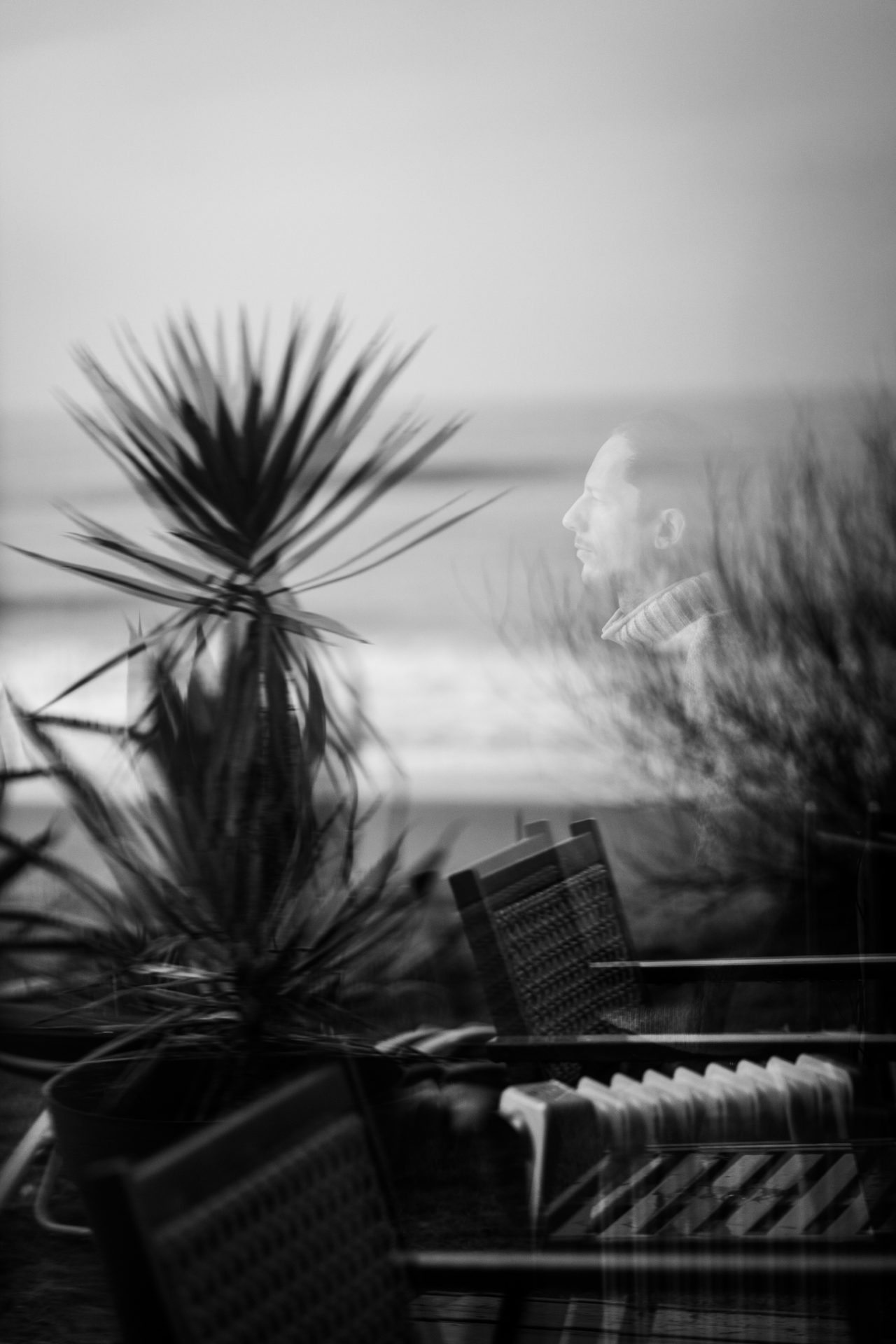
© Ester Dobiášová
At-home still lifes: Using window light
Still life photography takes patience and time, but is perfect for practicing at home. Use soft window light and simple subjects—berries, twigs, fruit, small containers, or fabric that highlights shape and texture.
Side lighting gently models form and reveals detail. Set a low ISO (around 200–800) and f-number around f/2.8 to separate the subject from the background. A slower shutter speed is fine—just stabilize your camera on a table or windowsill. Turn off artificial lights to avoid mixing color temperatures.


© Ester Dobiášová
Photographing the oddities of everyday life
Try walking through your home as if you’re seeing it for the first time. Don’t look for beauty—look for quirks and details that might surprise a visitor from another planet (or at least another culture). Up close, a stalk of celery or a sliced beet can look almost extraterrestrial. Experiment with angles. Get low to the ground, shoot from above, or move around your subject.


© Ester Dobiášová
Over time, these small discoveries can naturally form a series, connected by color, shape, or mood.


© Ester Dobiášová
At-home documentary photography: A long-term window project
If you’re patient and enjoy observing small changes, try a documentary series. A great example is the series Views from the Window of my Flat by Czech photographer Jiří Hanke. The series is built on repetition and observation over many years.
You can also photograph the view from your window—different days, light, people, moods, and during different events. The frame stays the same, but the world outside keeps changing. Over time, you can use these photos to create a visual chronicle, just like Hanke.


© Ester Dobiášová
Using natural light at home
If you’re short on ideas, simply follow the light. Sunbeams and the objects they illuminate can become your main subject. Winter sunlight is rare, making it even more rewarding to photograph.
Watch where the light falls and how the curtains or blinds shape the shadows. Notice how it moves through your home during the day. Try slightly underexposing in manual mode to emphasize contrast and highlight the character of the light.


© Ester Dobiášová
Winter is the perfect season for experimentation and discovery—and your home is a space where you have the peace and quiet to create and find your photographic path.
FAQs
What camera settings should I use for at-home photography? Take advantage of window light. Set a lower ISO (around 200–800, depending on the available light), and use a wider aperture (e.g., f/2.8–f/4) to separate the subject from the background. Make sure your shutter speed is fast enough to keep the image sharp. If the light is low, stabilize your camera on a table or windowsill, or use a tripod.
How can I take photos at home without flash? Flash often creates harsh shadows and flat light, so it’s better to work with side light from a window. Turn off artificial lighting to avoid mixing color temperatures, and watch how the light shapes objects or faces.
What can you photograph at home when you can’t go outside? Try still lifes, details of everyday objects, reflections in windows or mirrors, or enjoy experimenting with light and shadows. You can also create a short photo series with a simple story, or start a long-term project such as repeatedly photographing the view from your window.
How can I use natural winter light? Winter light tends to be soft and low, which works beautifully indoors. Observe where it falls, how it changes throughout the day, and the shadows it creates. Slight underexposure can help emphasize mood and contrast.
Does it make sense to take photos at home with a smartphone? Yes. Light, composition, and your approach to the subject matter are more important than the camera itself. Shoot near a window, avoid digital zoom, and focus on clean, simple scenes.