How to Photograph Animals in Motion
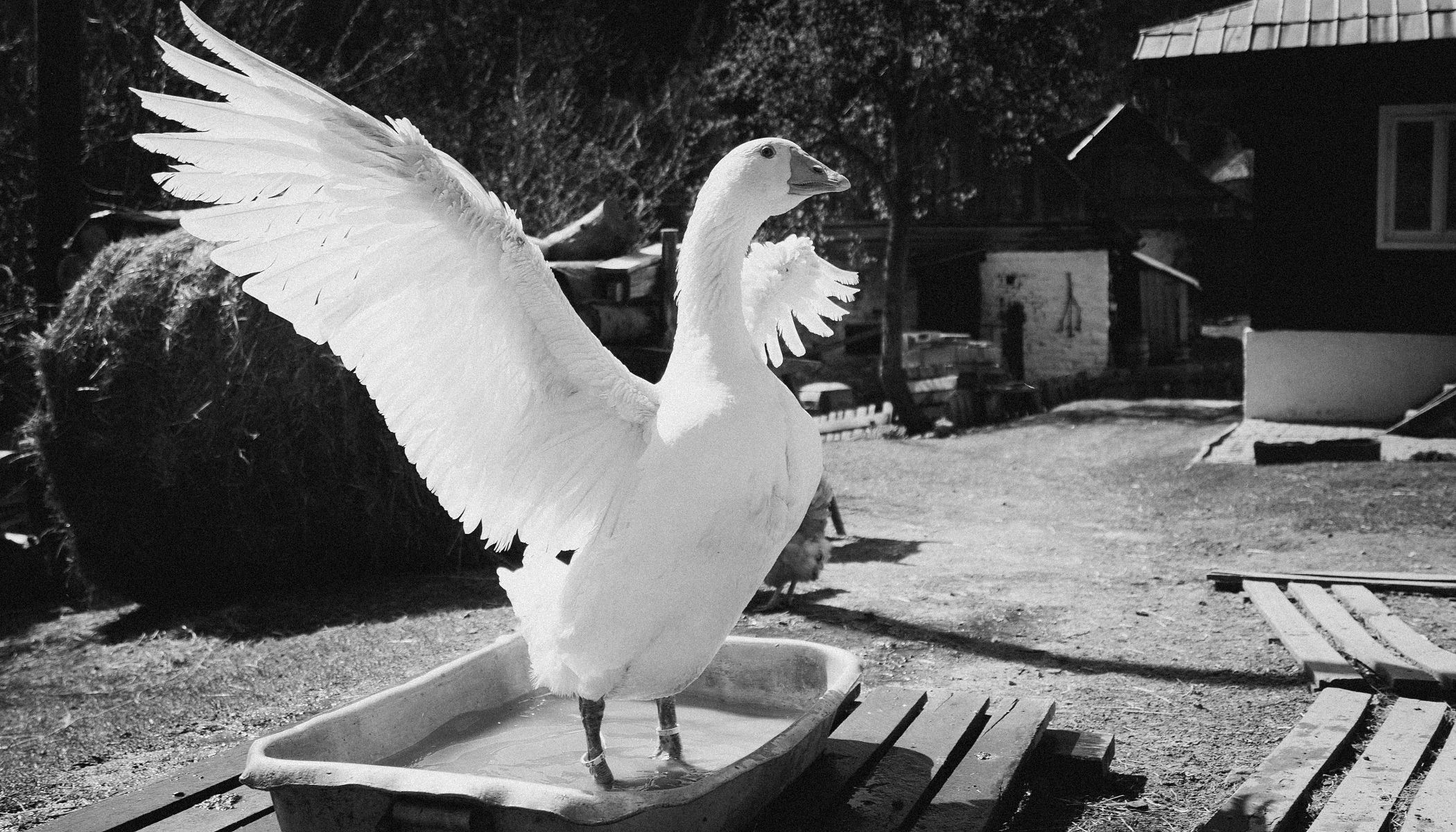
Whether it’s a cheetah sprinting across the savanna, a hummingbird flitting over a flower, or the family dog chasing a ball in the yard, capturing the perfect split second requires a combination of technical precision, patience, and preparation. Animal movement is unpredictable and often involves a unique moment that may not happen again any time soon. Photographing animals in motion forces you to go beyond basic camera settings and truly understand how your equipment works.
In this article, you’ll learn:
- Which lens to choose for photographing animals in motion.
- How to set up your camera—shutter speed, focus, and ISO.
- How to photograph your pets in motion.
- What to focus on when photographing animals in their natural habitats.
- How intentional motion blur can enhance a photograph.
To successfully photograph moving subjects, you need to learn how to work with fast shutter speeds, advanced autofocus modes, and ideally, continuous shooting. Of course, you can also experiment with motion blur. It should be an intentional effect, not the result of the wrong camera settings.
Great action photography isn’t just about technical skill. To a large extent, it relies on understanding animal behavior so you can anticipate an animal’s next move before it happens.

1. What’s the best lens?
It really depends on what you want to photograph and how close you can get to the animal. When photographing animals, I try to get as close as possible, which is why I use a 16–35 mm wide-angle lens with an f/4 aperture. This is a somewhat unconventional choice. Of course, this assumes that I know the animals at least a little, or at the very least, that I’m not afraid of them. In general, a telephoto lens is best suited for photographing animals.

An undeniable advantage of a telephoto lens is that it gives you the flexibility to adjust the focal length as the animal moves closer or farther away, without having to physically move yourself. If you’re photographing pets, birds in the garden, or animals at the zoo, a lens with a focal length ranging from 70mm to 300mm is enough. Other options include lenses with a focal length ranging from 150-600mm or 200-600mm. These are particularly well-suited to wildlife photography. They provide enough reach for distant birds or shy mammals while also allowing you to zoom out as the animal approaches.


© Ondrej Čechvala
2. Camera settings
There are several ways to set up your camera for photographing animals in motion. You may have heard that it’s best to use manual mode. I haven’t found manual mode very effective, because I constantly have to think about the settings and can’t fully concentrate on my subject. This is why I prefer semi-automatic modes.

The simplest solution is probably to set the camera to shutter-priority mode, which helps ensure that your subject isn’t blurry. However, I’ve also had good results with aperture-priority mode, provided I set a minimum shutter speed in the camera menu. For walking animals, use at least 1/500 to 1/1000 of a second; for running animals or birds in flight, use 1/2000 to 1/4000 of a second.
At the same time, switch to continuous autofocus (AF-C or AI Servo) and enable animal detection if your camera supports it. It’s also a good idea to switch to auto ISO and set the ISO range based on how well your camera handles noise and how much you plan to crop the photo later.
However, keep in mind that there is no single “correct” setting. It all depends on your camera’s capabilities and your creative goal. So don’t be afraid to experiment.
3. How to photograph pets in motion
Don’t be afraid to get closer to the animal and get down to its eye level. If the animal knows you, it will often respond by happily running right up to your camera lens. That’s why it’s a good idea to have someone with you who can play with the animal and distract it. Here again, patience is key.

Unlike new animals, you already know your pet’s personality. You can take it places it knows and loves. At the same time, focus on places where your pet can move around, jump over obstacles, and run around freely. It’s better to be prepared than to chase the animal blindly.

4. Animals in motion while traveling
First and foremost, try to find out as much as you can about the animal you want to photograph. For example, learn about its habits, where it lives, and what time of day it’s most active. Don’t expect to locate the animal, take a few shots, and be done. Be patient, observe the animal in its habitat, and study its behavior. The more you study it, the better you can anticipate what it might do. And you can be ready to capture exceptional action shots. To capture an animal’s speed in sharp detail, use faster shutter speeds of 1/2000s, 1/3000s, or even faster.


© Ondrej Čechvala
5. Sharpness isn’t everything
Although pin-sharp images with the subject completely frozen in place are impressive, this is not the only way to capture movement. By intentionally blurring the animal, you can often better convey a sense of motion and the raw energy of nature. It’s not just about documenting real life, but about capturing a feeling and your own interpretation of reality.

A popular technique is panning, where you track the animal’s movement with your camera during a long exposure, keeping the subject relatively sharp while blurring the background. Another example of creative use is capturing birds in flight with a slight blur in their wings, allowing you to emphasize their speed and grace.
Birds’ wings usually move much faster than their bodies, so depending on the species, you can experiment with this effect at various shutter speeds, such as 1/100 to 1/200s. For an even more abstract and artistic look, you can use a slow shutter speed, such as 1/20s or slower. Either way, even when you’re using these effects intentionally, the result is always somewhat of a surprise.
FAQs
What is the best lens for animal photography?
Generally, a telephoto lens is best—70–300 mm for pets or zoo animals or 150–600 mm for wildlife at greater distances. It allows you to zoom in without needing to physically move.
What shutter speed should you use to freeze animal movement?
For walking animals, 1/500 to 1/1000 of a second is usually enough. For running animals or birds in flight, use 1/2000 to 1/4000 of a second. The exact value depends on the speed of movement and focal length used.
Which camera mode is best for photographing animals in motion?
Shutter-priority mode or aperture-priority mode with a minimum shutter speed set in the camera menu works well. It’s also important to enable continuous autofocus (AF-C or AI Servo) and, if available, the animal detection feature.
How can you take photos of your pets in motion?
It helps to get close and get down to the animal’s eye level. Bring someone along who can distract your pet and play with it. The advantage is that you know the places and situations where your pet likes to move around freely and so you can prepare in advance.
Is it always best to capture animals in sharp focus or can motion blur be beneficial?
Intentional motion blur can give a photo a sense of speed and energy that a pin-sharp image cannot. Examples include panning, where you track the animal with your camera during a long exposure, or capturing a slight blur in a flying bird’s wings at shutter speeds of around 1/100 to 1/200s.