How to Photograph Live Events: From Preparation to Final Selection
Learn how to photograph events such as concerts, theater performances, or festivals. In this article, I walk you through preparation, choosing the right gear, working with light and the environment, and capturing key moments and the overall atmosphere.
In this article, you’ll learn:
- How to prepare for photographing concerts, theater performances, and festivals.
- What equipment and lenses to choose for different types of events.
- How to work with light, the environment, and atmosphere.
- How to capture key moments and emotions.
- How to build a reportage photo series that tells a story.
- How to select the best shots and edit them in a consistent style.
You may have found yourself in a situation where someone asks you to photograph a concert, a play, or an art opening, and you feel both excited and slightly nervous. Event photography isn’t just about choosing the right camera and lenses. It’s about reading the atmosphere, being empathetic, anticipating key moments, and reacting quickly.

Preparing for event photography
A large part of successful event coverage happens even before you press the shutter button. It’s essential to find out the event schedule and clarify the conditions with the organizers. You should know what’ s expected of you, where you can go, and which moments are most important.
It’s equally important to agree on how the photos will be used and what the compensation will be—whether it’s a paid assignment, unpaid work, or an exchange.

If possible, arrange to have backstage access—behind-the-scenes photos can add a lot to your final series. Arrive early, walk through the venue, and look for interesting angles and good lighting.
You can get inspired by photos from previous years to get a sense of what to expect. And don’t forget about what you wear—dark, unobtrusive clothing that blends in, while still being socially appropriate and comfortable for a full day on your feet.


Gear for event photography
When it comes to gear, less is more. You’ll appreciate a lightweight setup that lets you focus on the action instead of constantly fiddling with your gear. Having two camera bodies with different lenses is a big advantage—it saves time and gives you a backup in case of malfunction.

Choosing between zoom and prime lenses depends on your shooting style. Zoom lenses are more versatile in tight spaces, while prime lenses offer better image quality and faster lens speeds—but require more movement. If your camera has a silent mode, use it so you don’t disturb the performers or audience.
Remember, a strong moment matters more than technical perfection. You can get great photos even with an average camera.

For more intimate events like book readings or theater performances, fast prime lenses (35 mm, 50 mm, 85 mm) work well in low light. For concerts and dynamic events, 24-70 mm, 70-200 mm zoom lenses, or ultra wide-angle lenses are more practical. Art openings and other social events call for wider focal lengths (24–35 mm) to capture the atmosphere and interactions.
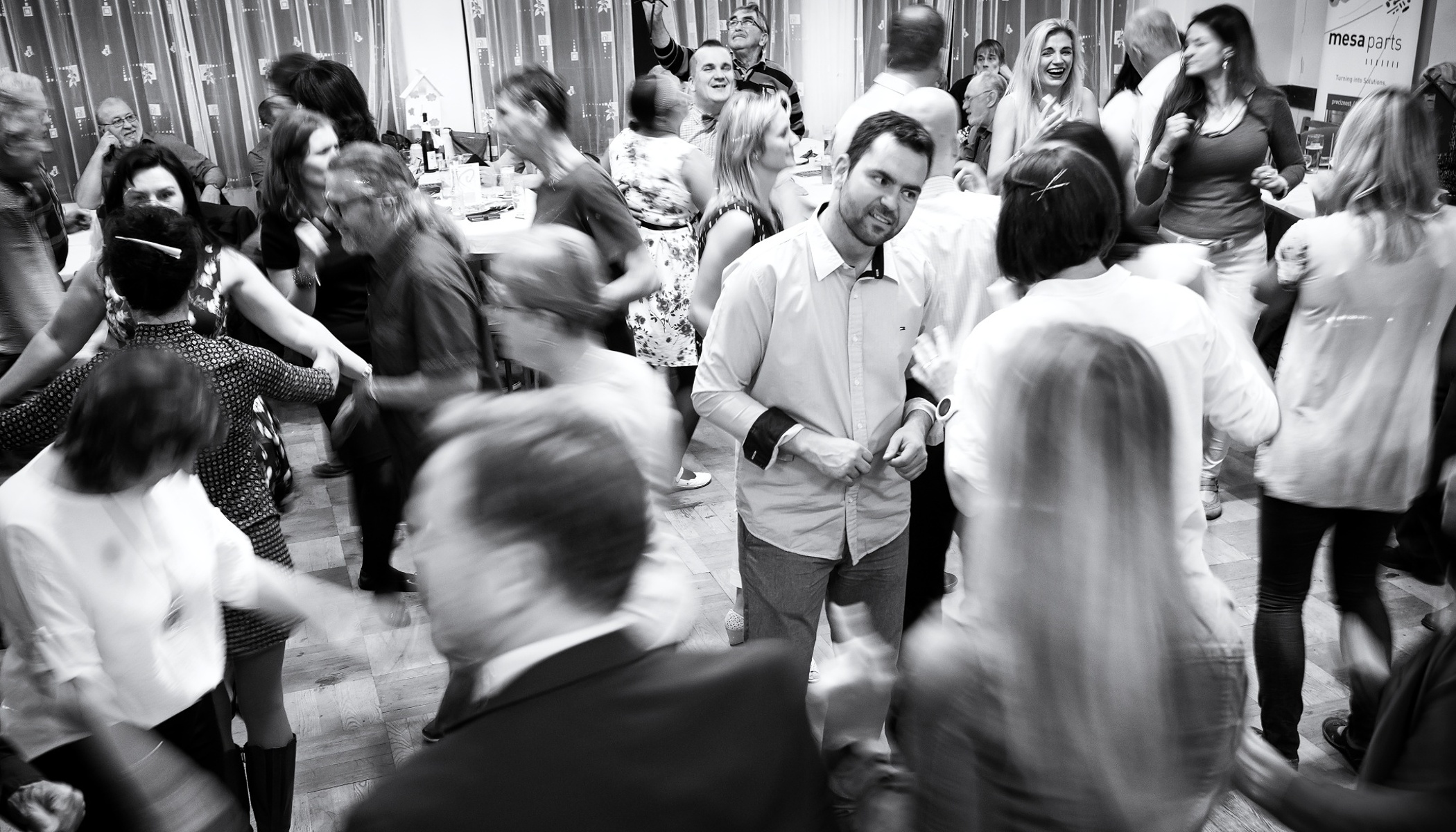
Don’t be afraid to supplement your reportage photos with creative photos. Try longer exposures to capture motion blur, or shoot from different perspectives—low angles or high angles.


Event photography is about telling a story
Good reportage photography isn’t just about a collection of pretty pictures. Your final series should tell the story of the event, capture key moments, and combine different types of shots so that the viewer feels immersed.
Alternate between wide shots that capture the atmosphere, medium shots, and close-ups. Don’t focus solely on people—include details like decorations, instruments, or clothing. This makes your series more varied and engaging.
How to behave during an event
Your behavior matters. Be friendly—people respond well to positive energy, making them feel more comfortable in front of your camera. This allows you to capture them much more naturally. Move respectfully through the space and be considerate of both the audience and other photographers.


Photos from the tea festival. The final selection should be varied. ©Lenka Krejčová
Photo selection and post-production: Capturing the event’s atmosphere
A common mistake is including too many similar photos in the final series. Your series should tell a story and guide the viewer through the event, without boring them with two hundred nearly identical photos.
When editing, focus on consistency. The series should have a unified look. Adjustments should enhance what you saw, not completely transform it. If you use presets, stick to one style per set.
Zoner Studio is great for selecting images using star ratings or colored labels. You can also use AI Close-ups to compare similar shots and choose the best one.
FAQs
What camera is best for event photography?
A camera with good high ISO performance and fast autofocus is best. Silent mode is also a big advantage.
What lenses are suitable for concerts and festivals?
Fast zoom lenses (24–70 mm, 70–200 mm) and prime lenses (35 mm, 50 mm, 85 mm) perform well in low-light conditions.
How do you shoot in low light?
Increase ISO, use a fast lens, and take advantage of available light (spotlights, stage lighting). A steady stance or faster shutter speed can also help.
How do you capture the atmosphere of an event?
Combine wide shots, close-ups, and candid shots of people. Focus on the main performance but also on the audience’s reaction and details from the setting.
How many photos should you deliver to your client?
It’s better to deliver a smaller, carefully curated selection rather than hundreds of similar images. The final series should be varied and tell the story of the entire event.
How should you edit event photos?
Keep a consistent editing style, avoid overdoing effects, and preserve the natural look of light and color.