Creating Powerful Photo Series
A single photograph can be beautiful, but it often feels like a sentence taken out of context. A photo series, on the other hand, lets you develop an idea and draw the viewer into a narrative. The images begin to communicate with one another, and together they form a whole that is more compelling than any individual photograph.
In this article, we discuss:
- why it pays to think in terms of photographic series.
- the basic types of photo series and how they differ.
- how to create your own photo series, step by step.
- how to work image selection and sequencing so the series functions as a whole.
- where to find inspiration in the work of well-known photographers experienced in working with series.
Why photo series matter
- A photographic series allows you to develop an idea that might be too brief in a single image.
- A series helps tell a story. The viewer moves from frame to frame and gradually understands how emotions or meaning evolve. What a single photo can only suggest is unfolded across the entire series. This is why series are so common in reportage or documentary photography.
- A series creates visual continuity. When images have common elements—such as color, light, or mood—they begin to function as a unified whole.
- Series tend to leave a deeper impression on their viewers. A series can be more compelling than individual images. In exhibitions, portfolios, or personal projects, they draw the viewer in and leave a lasting impression.


Can you tell these photos are part of a series? They share the same visual style, are shot in black and white with visible film grain, and use the same horizontal format. With a bit of imagination, they suggest a story that’s open to interpretation. This approach can intrigue viewers, even if it may frustrate some. I photographed this series during a period of mental distress, though not as extreme as the images may suggest. Still, there is always another person who acts as a counterbalance to that imagined edge. Rearranging these photographs would tell a different story altogether. This flexibility is one of the things I enjoy most about working with photo series.
Types of photo series
Not all series work in the same way. Some are built around a single motif, others around observing change over time, or around telling a coherent story. Knowing the basic types of series is useful because each teaches you something different.
- Thematic series are based on a single motif that is repeated in various forms. This might include themes like “windows,” “hands,” “city shadows,” or “color contrasts.”
- Time series focus on change over time. You might photograph one place, like a tree, a forest, or a street, at different times of day, different seasons, or every day for a month. This type of series reveals gradual shifts and connections and works well landscape photography.
- Project series have a clear intention and structure. The photographer sets out to document a specific community, event, or topic. These series are often long-term and may result in an exhibition, book, or published project.
- Narrative Series function as a visual essay. Each photograph acts as a chapter, and together they form a story with a beginning, climax, and ending. This type of series is closest to reportage or cinematic storytelling.


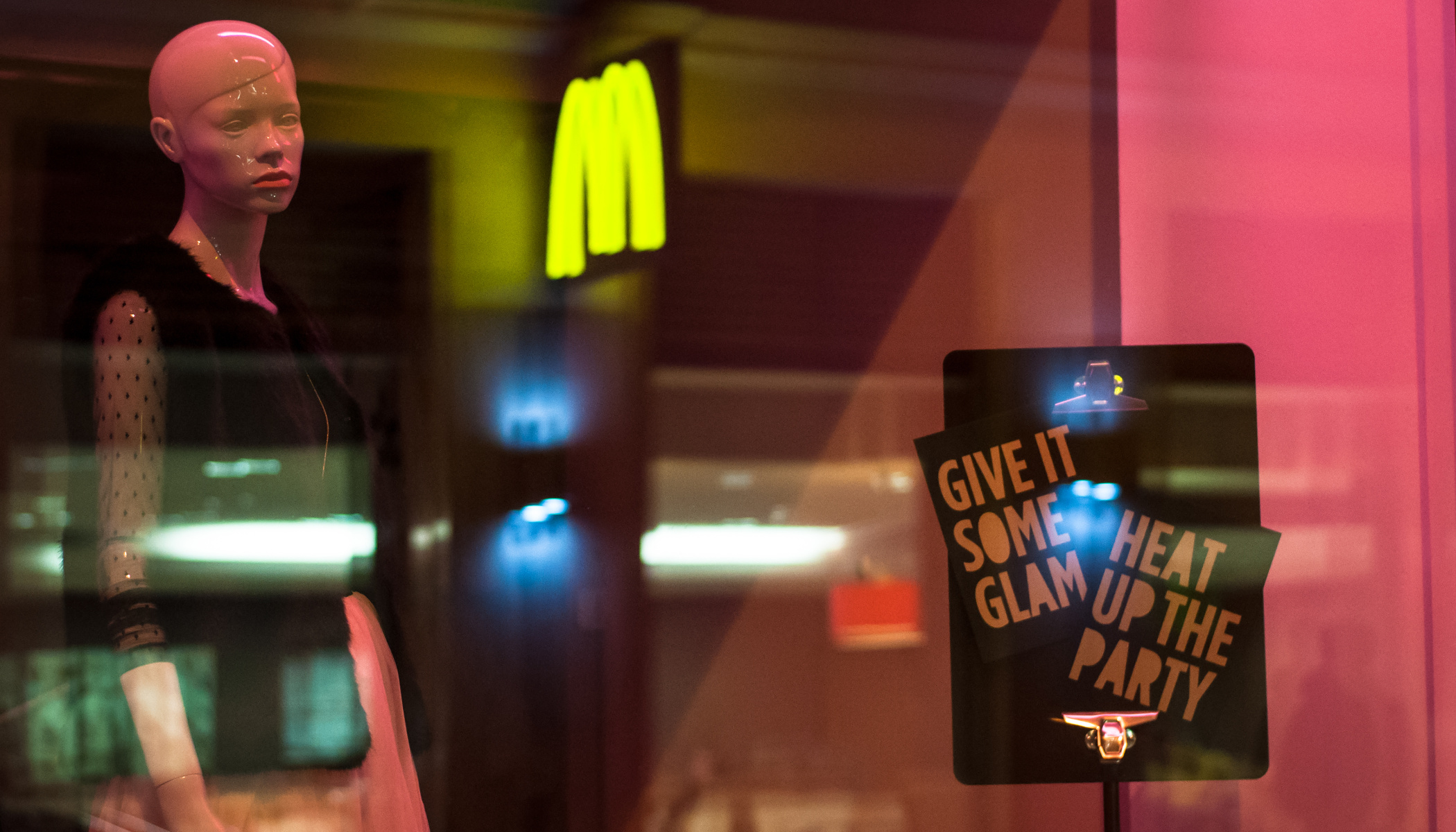
I’ve been photographing mannequins in cities for several years. They reveal far more about people than it may seem at first glance. I don’t photograph every mannequin I come across—only those that resonate with me through their expression or sense of emptiness. While the images are linked by a theme and intuition, that alone isn’t enough. Turning them into a coherent series is where the real challenge begins.
Finding inspiration
To truly understand the potential of a photographic series, it helps to study photographers who use series as a fundamental language. Their work shows how individual images can come together to form something that is much more than the sum of its parts.
One of the masters is Sebastião Salgado. His monumental black and white projects, such as Workers or Genesis, are not just collections of beautiful photographs. They are a long-term documentary series that took years and involved extensive travel. Through them, Salgado maps human labor as well as the beauty and fragility of the planet, showing how a series can also serve as visual testimony.
Vivian Maier represents a different approach. Her predominantly black and white photographs of Chicago streets and anonymous passersby form a fascinating archive of urban life. Although she never intended them to be comprehensive projects, her repeated focus on similar motifs and moments naturally resulted in a powerful series capturing everyday life, details, and fleeting moments.
Josef Koudelka is also worth mentioning. His series from exile and documentary cycles, Invasion 1968 and Gypsies, demonstrate that a series can carry not only visual impact, but also historical memory.
These examples show that a series is not simply “more photos of the same thing,” but a method of storytelling that allows the photographer to fully develop an idea—and the viewer to experience it fully.
Creating your own photo series
Creating a series isn’t just about gathering more images around a theme. It requires intention, but also openness and a willingness to experiment.
Start by choosing a theme. It doesn’t have to be ambitious. You may be drawn to a certain street in your city, facial expressions on the public bus, or the way afternoon light casts shadows on the walls. What matters is that the theme sparked your curiosity.
Next, think about structure and image selection. A photo series works much like a short story: it needs a beginning, middle, and end. Include different types of images—wide shots, close-ups, and quieter moments. This helps establish a rhythm that keeps the viewer engaged.
Style and continuity are just as important. The series needs a connecting thread, whether it’s a consistent color scheme, quality of light, camera angle, or mood. This helps the series hold together, even if the photos were taken at different times.


You can tell these photos are part of a series. The connecting thread is the color blue, along with the environment, and an underlying story. I titled this series Blue Summer at Mom’s. It refers to feelings of sadness, expressed by both the individual images and the color tone throughout. As with any series, changing the sequence would change how the story is perceived.
Finally, focus on editing and final image selection. In most cases, less really is more. A series doesn’t need dozens of images. Often, five to ten carefully chosen photographs are enough. Set aside those that don’t serve the whole, even if they’re photos you like. The strength of a series lies in cohesion.
Taking it one step further
A series isn’t just a group of images on a shared theme. It’s a connected whole that gives your photography direction and clarity. A single photo may be beautiful, but a series gives you a voice. Start small. Create a short series of five images centered around one theme, and see how the process helps you evolve as a photographer. Look around—what will be your first series?
FAQs
How many photos should a series have? There’s no fixed number. Often, five to ten images that share a theme, visual language, and story are enough. Cohesion matters more than quantity.
Does a series always need a clear story? Not necessarily. Some series are driven by mood, visual consistency, or recurring motifs. The narrative can be explicit or left open to interpretation.
Is it better to plan a series in advance or let it develop spontaneously? Both approaches work. Sometimes series grow organically over time, while others start with a clear concept. It’s important to critically edit the images retrospectively.
How can I tell if images belong in the same series? They should share common elements—theme, color, light, format, or mood. If they work side by side naturally and seem to “speak” to one another, you’re on the right track.
Does it make sense for beginners to work in series? Absolutely. Working in series helps develop photographic thinking, patience, editing skills, and conscious work with a theme, regardless of experience level.