

Finding Color in the Winter Gray: How To Photograph City Scenes
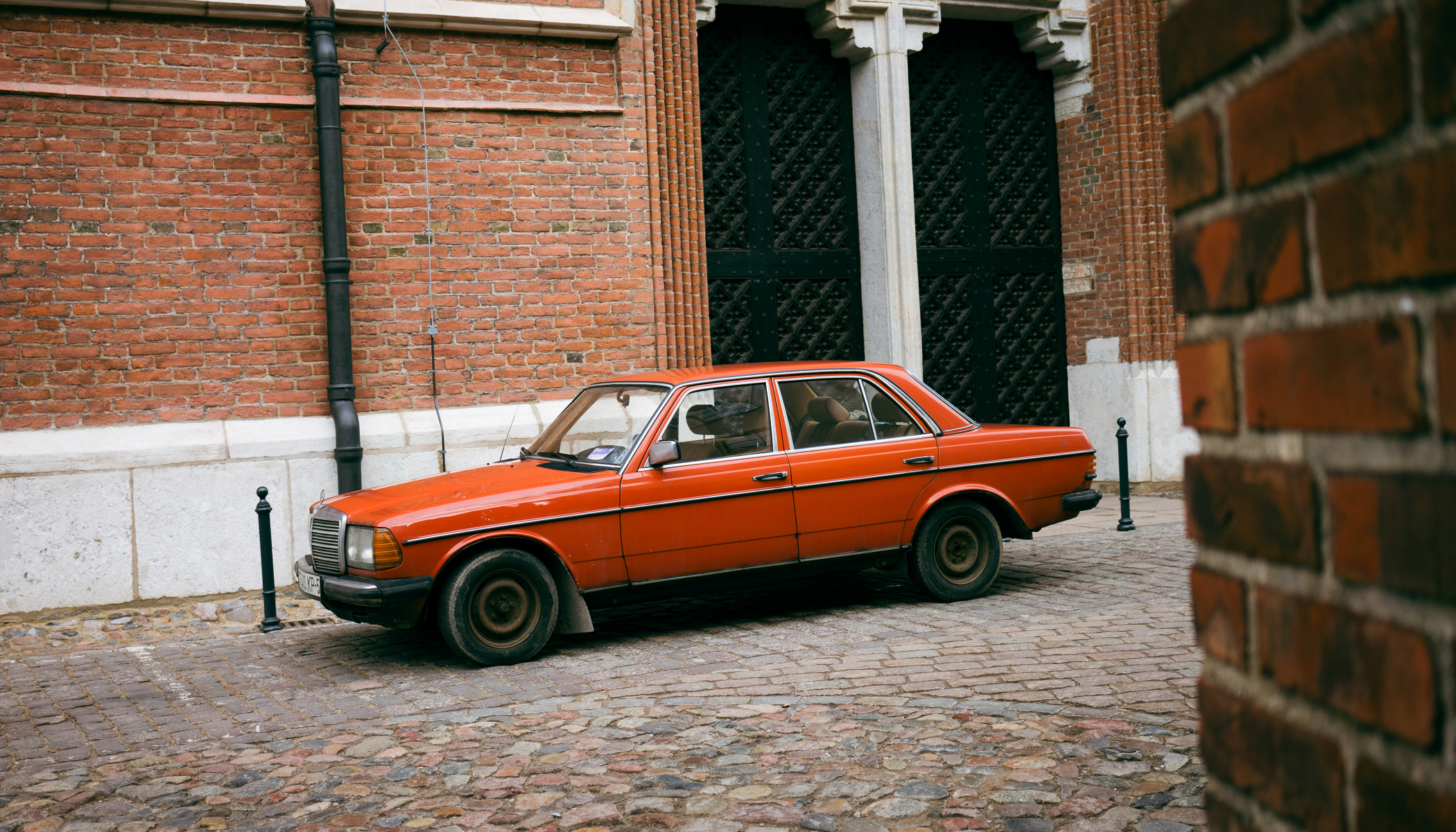
At first glance, a snowless winter city can look dull and dreary, especially with overcast skies and cold, rainy weather. But winter is actually one of the best times to take compelling photos. You just need attention and creativity to learn how to spot them among the gray streets.
In this article, we discuss:
- why a snowless winter city is a great training ground for photographers.
- how to use color as the main motif and visual anchor.
- where to look for colorful accents and contrast.
- how to work with light, shop windows, and reflections.
- why certain colors (red, yellow, green) are more visually effective than others.
- how working with color series can improve your photographic vision.
To begin, focus on color accents—a red jacket, yellow trim, a green plant behind a window. Often, a single color is enough to create a powerful photo.
Color as the main motif
In an otherwise neutral scene, color acts as a visual anchor—a point where the viewer’s eye immediately stops. This is why color often has a greater impact in winter than in summer, when leaves, flowers, and colorful clothing all compete for attention. Gray sidewalks, bare trees, and simple facades give color space to stand out. The more neutral the background, the more striking the effect. Try to think in colors before you raise your camera. Look for a scene where one color carries the visual message.
Shop windows and reflections
In winter, interiors tend to be rich in light and color, while the streets are more subdued. Looking through windows or shopfronts becomes a natural source of warmth and contrast. Focus on colorful details in café or shop windows—lamps, posters, colorful walls, or plants.
Glass adds another layer—your reflection, your coat, or the surrounding street. Work with the composition so the layers connect. Glass, interior, and reflection can work together in a single image. Adjust your angle slightly, move closer or farther away, and let the reflection complement the scene.


Follow light, not the season
In winter, the sun stays low and often comes from the side. This is an advantage: the light is softer and shapes color beautifully. Watch where the light falls and position yourself so it gently hits the subject from the side—the colors appear richer, making objects pop more.
When daylight is limited, use what the city has to offer. Shop windows, streetlamps, and car lights can all bring life into a scene. You can also use your phone light or a small flashlight to briefly illuminate a detail. Even subtle light can help color separate from the background and create a shadow.

Attract attention with bold colors
Colors are more than just aesthetically pleasing elements; they also have a psychological effect. Some catch the eye faster than others. Red sits at the top of the list. Whether you’re outdoors or in the city, red signals danger; red traffic lights and signs mean Caution! We are conditioned to notice it immediately. In photography, it naturally becomes a visual magnet.
That’s why it’s important to use colors with intention. Red should either be the main subject or not be present at all. Too much red can distract from the scene and fragment attention. A useful guideline: treat color like light. One dominant color is often enough to hold a photo together and give it direction.


Yellowis another powerful color. It feels fresh, energetic, and lively. We associate it with light and optimism, which makes it an effective focal point. In winter cities, it can visually replace sunlight, especially when surrounded by neutral, gray surroundings.


Architecture as a colorful backdrop
Urban architecture is the perfect backdrop for color in winter. Colorful gates or staircases stand out more when they’re not competing with visual clutter. Pay close attention to facades, tiles, or simple graphic elements.
In Budapest, you can find many brightly colored doors. Green conveys balance and calm. In winter, it feels almost out of place, which is exactly why it works so well. It brings a sense of life into concrete surroundings.

Winter city as a training ground
Winter encourages us to slow down and examine the world around us more closely. Working with color is a great way to stay creative throughout the year and not abandon photography just because “the weather isn’t nice.” Go for a walk with no fixed goal and let color guide you.
Try this exercise: Choose one color and photograph it throughout the day. Whether you choose yellow, green, or red, you can end up with a coherent series connected by color. Projects like this are excellent practice.

FAQs
Do I need snow in my winter city photos for them to work? No. The absence of snow often creates a neutral backdrop that allows colors to stand out even more.
Which color works best in winter photography? Start with red or yellow. They attract attention naturally. Over time, you can experiment with more subtle colors.
Does it make sense to take photos in winter even without sunshine? Yes. Soft winter light, shop windows, streetlamps, and reflections can all bring life to a scene, even under overcast skies.
How can I avoid chaotic, overly colorful photos? Limit the number of dominant colors. One dominant color and a calm background usually work better than several competing accents.
Is it better to photograph colors indoors or outdoors? Both have different advantages. Streets bring contrast and authenticity; interiors bring warmth, light, and richer colors. Combining both can be very effective.


There are no comments yet.