

5 Photography Myths Debunked
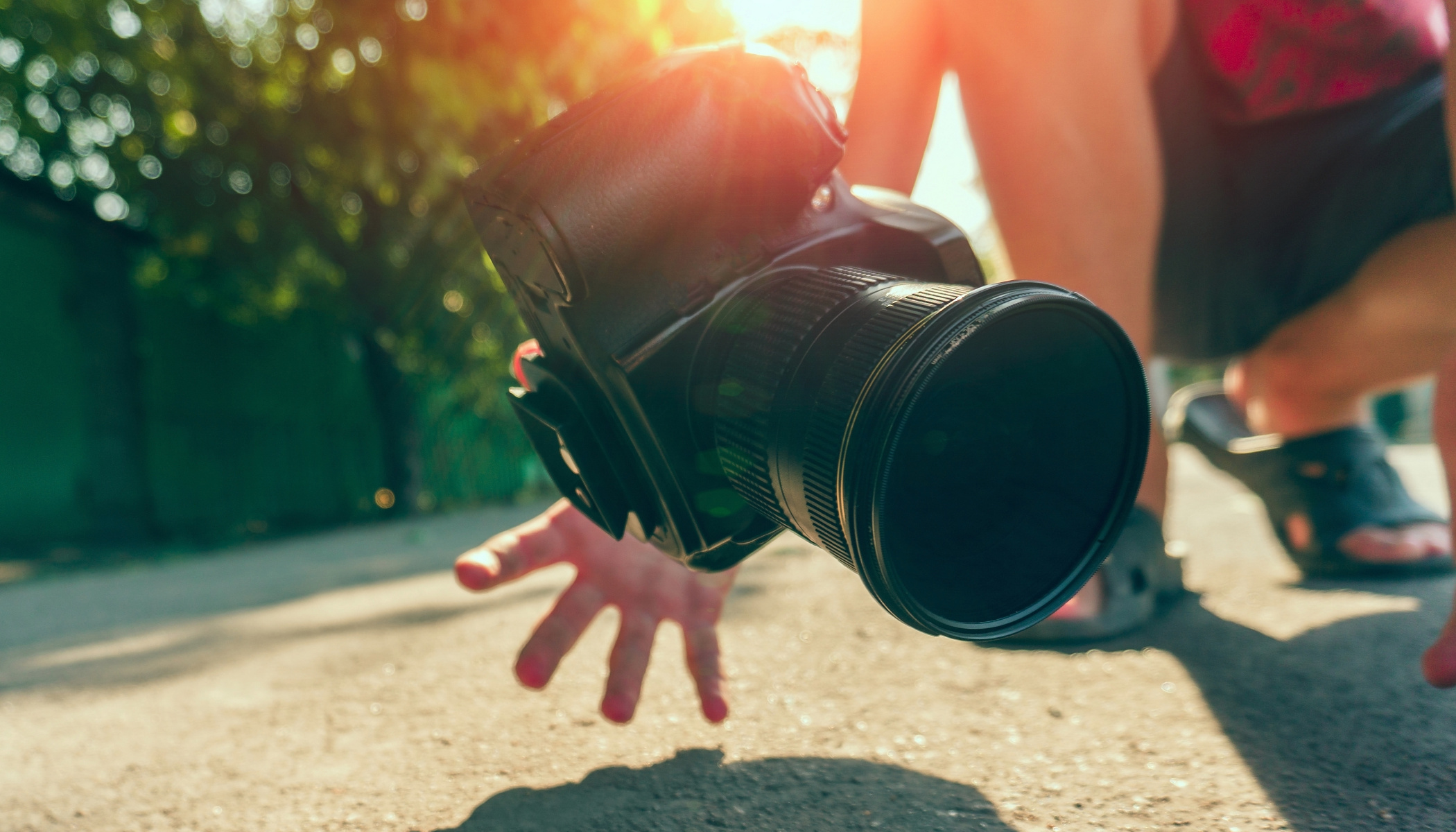
Beginner photographers often adopt long-standing rules and clichés without questioning them. They accept them as facts—“this is not done” and “this is the right way.” Let’s look at five common photography myths and why they no longer apply.
In this article, we cover:
- photography rules that are no longer valid—and why.
- how to work with backlighting and silhouettes.
- why wearing white on a white background isn’t a mistake.
- why a wide-angle lens isn’t always the solution when you need to fit more into the frame.
- how to use a reflector so the light looks natural.
- when it makes sense (and when it doesn’t) to use flash for night photography.
Myth 1: Don’t shoot into the sun—it won’t work
This is something I was told when I was taking my first pictures with my Lomo film camera. To be safe, I avoided shooting into the sun, worried that nothing would turn out.
Today, we can immediately review our images and see that backlighting can be one of the most effective lighting situations—if used intentionally. Backlight is great for silhouettes, but there’s one key condition: the silhouette must be clearly visible. A shapeless blob with arms isn’t impressive. That’s why it’s important to find an angle that best defines your subject’s shape.


Backlighting creates silhouettes. It’s up to you to choose a pose for your model that makes the silhouette work visually.
Myth 2: White on white backgrounds won’t be visible
We hear this most often for passport or ID photos—and yes, there’s some truth to it. With flat front lighting and a light background, a white shirt can blend into the background. But this does not apply to most real-world photography situations.
Side light or slight backlight is usually enough to separate the subject from the background, creating depth while keeping the image cohesive. What’s more, “white on white” is a classic element of high-key photography—a light, airy style that subtly hides imperfections.


Myth 3: If you want to fit more into the frame, you need a wide-angle lens
And if you want to zoom in, you should use a zoom lens. Technically, this is true—but in practice, the cause and effect are often confused. Wide-angle lenses offer a field of view that the human eye isn’t used to, so space behaves differently: objects close to the camera are enlarged, while distant objects shrink quickly. The result is the familiar “peephole” effect.
For example, if you photograph a full figure from waist height, the person will appear to have short legs and a pot belly. From eye level, the head becomes disproportionately large while the legs still appear short. In group photos where people stand in a semicircle, the figures near the edges of the frame are also distorted. It’s also true that the wider the angle, the greater the depth of field—making it harder to blur the background.
In short: If you want to fit more into the frame but avoid distortion, take a few steps back and use a longer focal length.


Myth 4: Reflectors should be held low
When shooting portraits in bright sunlight with no nearby surfaces to reflect light, a reflector is indispensable. But I often see models standing with their backs to the sun and their faces lit from below with a silver reflector.

Imagine the scene without a reflector—the face would be almost completely dark. By adding a single light source from below, we end up with a bright chin, nostrils, and brow ridges. The effect is like something out of a horror movie.
In this situation, the reflector should be positioned the same way you would place a normal light source—from the side or from above.
A reflector from below only makes sense if the face is already lit from above and you’re using the reflector only to soften shadows.

Myth 5: You have to use flash when shooting at night
Usually, you don’t. One evening on Charles Bridge, an elderly American woman asked me for help. She was trying to photograph the moon, but all her photos were black. The solution was simple: I turned off her built-in flash.
It may sound funny, but this happens often. People take pictures of architecture, sunsets, or the night sky with built-in flash enabled—sometimes unknowingly, sometimes simply forgetting to turn it off. Every flash has a guide number that indicates how far it can effectively illuminate a scene. External flashes can reach tens of meters, but built-in flashes (including those in phones) usually reach only about 5-10 meters. Anything beyond that remains dark unless lit by another, equally powerful light source.

Built-in flash also produces flat front lighting that harshly separates the foreground from the background.
A final tip: If you’re shooting nighttime portraits in the city and still want to use flash, set a longer shutter speed. The flash will ensure a sharp foreground, and the longer exposure will help reveal the background and add atmosphere.


Further reading: 6 Beginner Mistakes and How to Fix Them.
FAQs
Do I have to follow all photography rules strictly? No. Rules and guidelines in photography are intended as tools, not restrictions. Once you understand why they work, you can break them deliberately.
Is shooting into the sun suitable for beginners? Yes, especially thanks to instant preview. Feel free to experiment, but make sure your main subject remains clearly visible.
Why do people on the edges of group photos look distorted? This isn’t a lens defect, but a perspective issue caused by short focal lengths and the proximity of the camera.
When does it make sense to use a reflector from below? Only when there is light already coming from above, and the reflector is used merely to soften the shadows, not as the main light source.
Can I shoot handheld at night? Yes, if you rely on available light, use a fast lens, or increase ISO. Flash often harms the scene rather than helping it.


There are no comments yet.