

How Many Lenses Does Your Smartphone Really Need? Marketing Hype vs. Reality
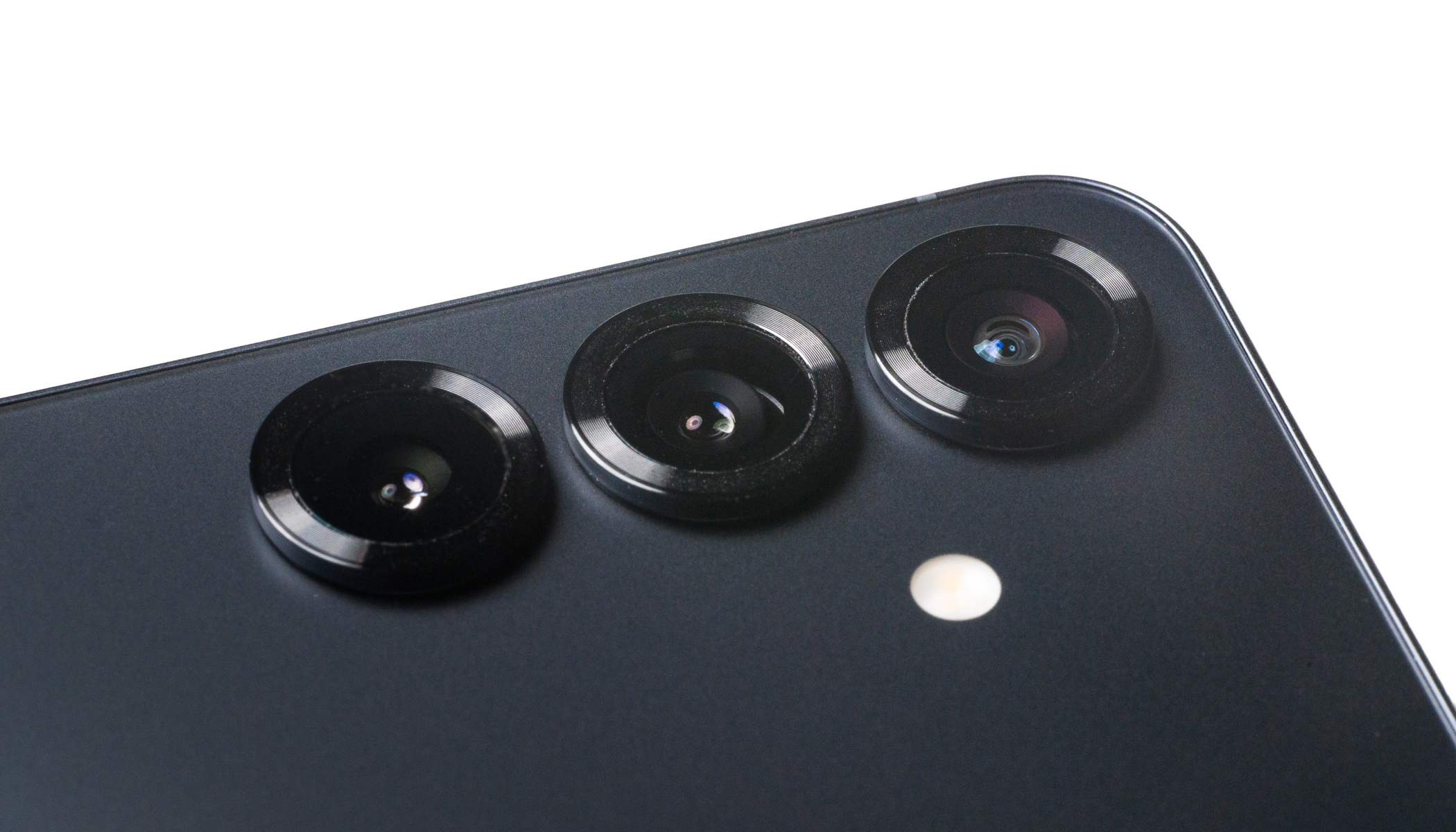
How many cameras does your smartphone actually need? Manufacturers boast three or more lenses and “optical zoom,” but reality might be different. We tested the differences between the main lens and the telephoto lens in a smartphone to find out when it’s a real upgrade—and when it’s just marketing hype.
In this article, you’ll learn:
- Why smartphone specs are often misleading.
- How lens speed works and why it’s difficult to compare across smartphones.
- What the real difference is between the main lens and the telephoto lens.
- What “optical zoom” means in practice.
- How resolution and cropping affect photo quality.
- When it does or doesn’t make sense to have multiple lenses.
- How to identify a high-quality phone camera based on tests.
Today’s smartphones often boast three lenses that noticeably stick out from the body of the phone. But what if it’s just a marketing gimmick? What if fewer cameras were enough—if you simply cropped the relevant part from the center of the image? It may sound strange, but that’s exactly what I tested with my phone.
For years, I’ve been saying that the camera specs in smartphones are misleading or even downright incorrect. Not only do marketing departments misunderstand them, but unfortunately, so do the vast majority of reviewers—including large, well-known websites.
Why lens speed in smartphones is misleading
The main issue is described in the article linked in the introduction, but to summarize: lens speed is expressed as an f-number, which is correct. It’s actually part of a formula where you substitute f—i.e, the focal length—and get the size of the opening in the lens through which light passes.
Focal length depends on sensor size, so a value like 4 mm doesn’t tell you much. That’s why it’s converted to a full-frame equivalent for presentation purposes. For example, it’s multiplied by six (what’s known as the crop factor). However, if aperture is left in the same notation, that would imply that the opening inside the lens has increased proportionally (sixfold)—which is not the case.
The correct approach is to multiply the f-number by the same crop factor to get comparable values. But that leads to less appealing numbers compared to full-frame cameras (which have lenses so large that the aperture is much wider). With telephoto lenses in smartphones, the factors are even higher—so a phone marketed as an f/2.4 may effectively behave more like f/23.
So listing a converted focal length while leaving the aperture unchanged doesn’t tell us much—but unfortunately, this is standard practice.
Challenges of comparing smartphone cameras
It’s difficult to compare cameras not only across smartphones, but even within a single device. They often use sensors of different sizes, which makes direct comparison of aperture values meaningless.
Once you add a different resolution from a tiny sensor into the mix, it quickly becomes a real mess.
Test: Samsung Galaxy S25 cameras
I purchased a phone whose specifications caught my attention—specifically when comparing the wide-angle camera and the telephoto lens. According to the numbers, the telephoto camera appears similar to a simple crop from the wide-angle camera.

The wide-angle lens has an equivalent focal length of 24 mm focal length and an aperture of f/8 (4.4 crop factor), paired with a 50-megapixel sensor.
The telephoto lens only has 12 megapixels, a focal length of 67 mm, and an aperture of f/23 (9.6 crop factor).
To avoid just throwing numbers around, I ran a series of tests. I always compare a full telephoto shot with a crop from the wide-angle image at the same pixel size. Everything was shot in the Samsung app using PRO mode (manual settings), and I use RAW files.
From here on, I use the simpler terms “telephoto” and “wide-angle,” even though each is actually a complete lens-and-sensor system.
Real difference in angle of view and background blur
This was the most interesting part. A crop from the wide-angle image results in roughly a 50 mm equivalent, while the telephoto lens is 67 mm. So how different are the results?
Here’s the comparison:
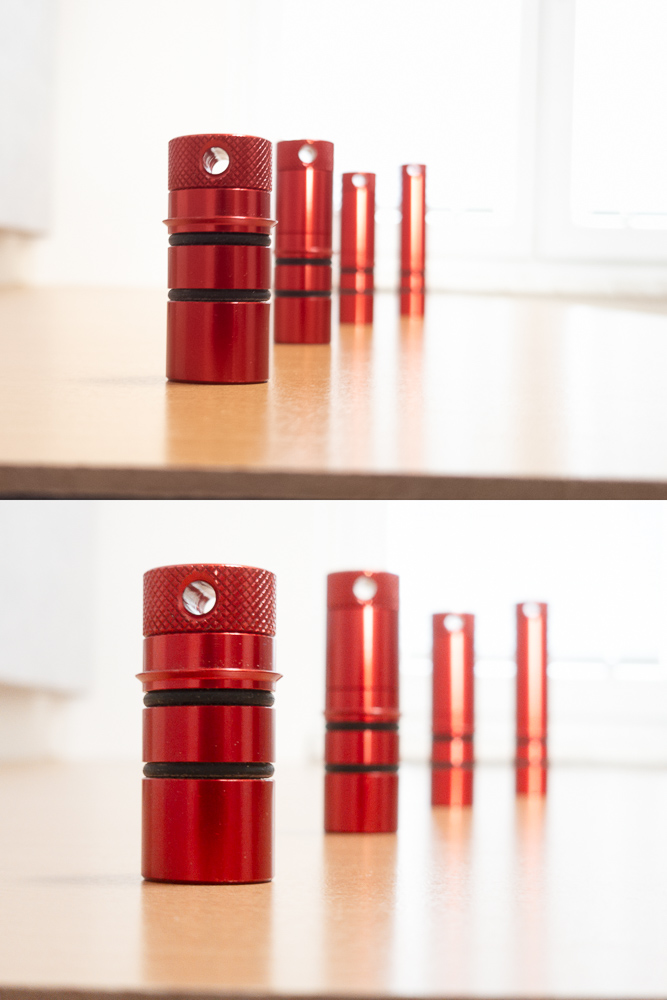
The phone was mounted on a tripod, but the lenses are slightly offset, so each has a slightly different angle of view. What’s interesting is that the proportions remain consistent.
As you can see, contrary to the manufacturer’s claim of 3x optical zoom, the actual magnification is close to 1.3x—nowhere near the advertised value.
The out-of-focus areas turned out even worse. The difference between the lenses is barely noticeable, which aligns with numbers: both have very similar aperture sizes: 3 mm (24 mm ÷ 8) versus 2.9 mm (67 mm ÷ 23). When you focus on the farthest red pin, it’s equally out of focus.
Detail quality: Which lens is sharper?
We’re also interested in how much detail each lens can resolve. This is the full scene at the lowest possible ISO, i.e., ISO 50.

Now for the details:

The telephoto lens captures slightly finer details, but it’s nowhere near three times better than the main camera.
Noise and image quality in low light
The difference in lens speed—f/8 versus f/23—might suggest that the wide-angle lens should perform much better. But remember, we’re cropping from it, which increases noise.
Another important factor is that the wide-angle image is about 0.5 EV brighter, meaning it requires less ISO. Since ISO can’t be adjusted in smaller increments, the wide-angle image was darkened to compensate, which also reduces noise.
The scene is the same, only ISO was increased to 3200.


Here we can see what the algorithms inside the phone have to contend with. In these cases, fine detail suffers, and with the wide-angle lens, noise appears partially smoothed by software. Even so, the telephoto lens retains slightly more detail and appears sharper in larger outputs.
Test results: Does a telephoto lens make sense?
The telephoto lens has a slight advantage over a crop from the main sensor, but it’s far from three times better. In practice, it’s closer to about 1.5 times.
But there’s a catch: only Samsung’s native app can access the full 50-megapixel output from the main lens. Third-party apps are limited to 12 megapixels, which prevents meaningful cropping. But this is just a software limitation.
A phone with a stronger main camera and fewer software restrictions could outperform both of these lenses—without needing a dedicated telephoto lens.
Telephoto lenses—Reality check
A common issue with telephoto lenses is that they capture only a small portion of the scene, which means less ambient light reaches the sensor. To compensate, they typically need a larger aperture, allowing them to capture a greater amount of light from each point in the scene.
This is why telephoto lenses on full-frame cameras are so large. It’s not about the sensor, but about the ability to get sufficient image quality. Customers are willing to accept larger hardware.
However, smartphones prioritize compact size, so large apertures aren’t feasible. Even periscope lenses don’t fully solve this limitation.
Wikipedia even has a list of the longest telephoto lenses in smartphones, with lens speed around f/20 with rare exceptions like the Xiaomi 15 Ultra with f/10.6. This phone has a noticeably large camera module with a thickness of 15.6 mm.
In short, don’t expect miracles from slim phones.
More lenses don’t always mean better quality
The only reliable way to compare smartphones is through camera reviews and real-world tests. And it’s not uncommon for a phone with fewer cameras to outperform one with more.
Some additional lenses are still useful regardless of their exact specifications. Ultra wide-angle lenses, for example, often have poor lens speed but are invaluable in tight spaces.
The number of cameras isn’t a reliable indicator of quality. In practice, the main sensor and image processing make the biggest difference. A telephoto lens can help—but usually less than the marketing suggests.
FAQs
Do more cameras mean better quality?
No. More lenses don’t automatically mean better photos. They’re often more about marketing than real benefits.
What is optical zoom in a smartphone?
Optical zoom means switching to a lens with a different focal length. In smartphones, the actual difference is often smaller than advertised.
Why can’t you compare aperture values across smartphones?
Because aperture depends on sensor size. The same f-number can represent very different lens speeds.
Is a telephoto lens or cropping from the main sensor better?
In many cases, the difference is surprisingly minimal. A crop from a high-quality main sensor can sometimes match or even outperform a telephoto lens.
How can I tell if a smartphone camera is good?
Not by the number of lenses, but by real-world tests.

There are no comments yet.