

Macro in Winter? Discover Beauty You Won’t See in Summer
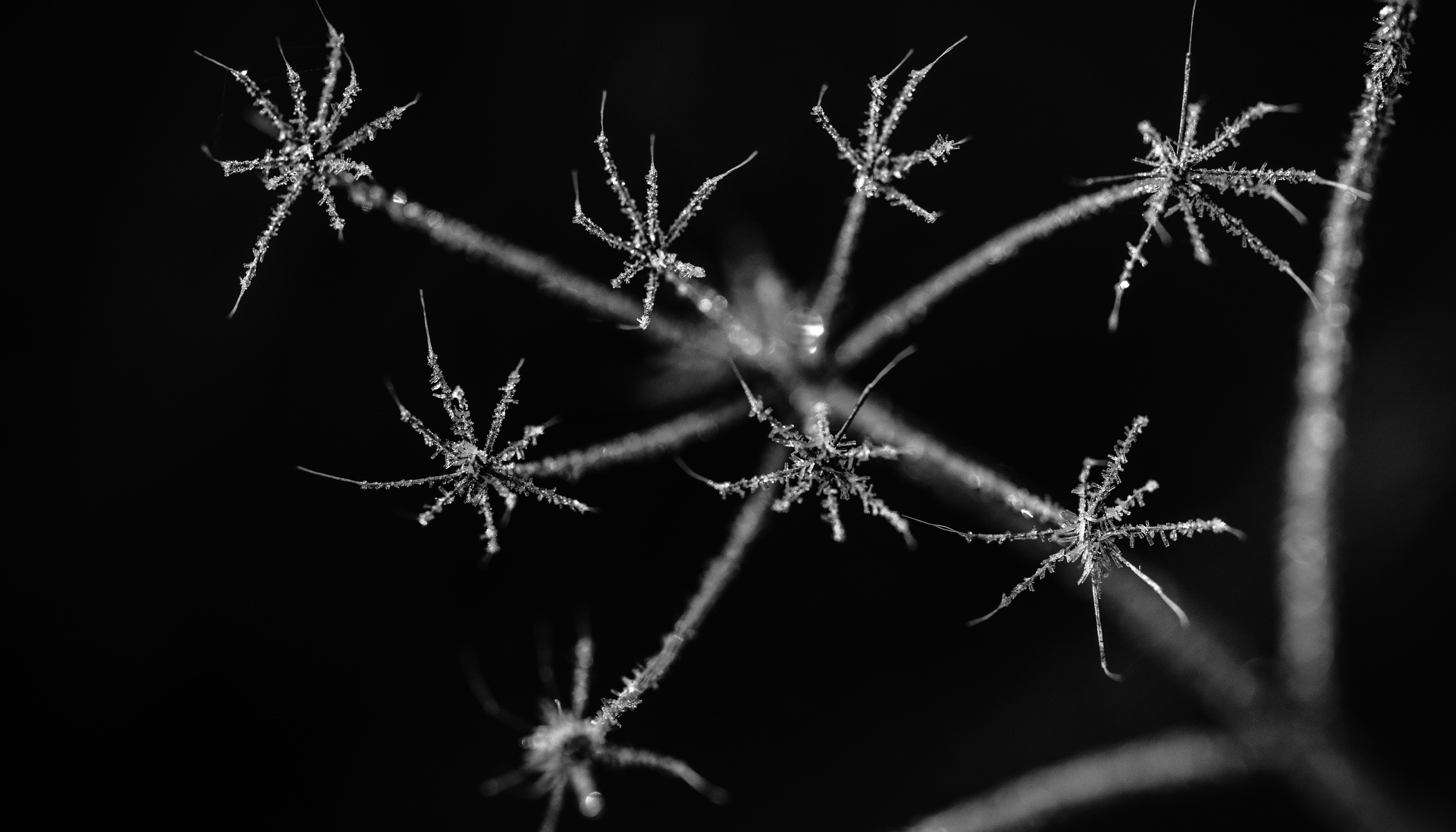
At first glance, winter can seem empty—little color, few plants, and not much movement. But in reality, it’s packed with details you won’t find at any other time of year. Frost creates delicate and prickly shapes, ice hides tiny bubbles and frozen flowers. Winter macro photography tends to be minimalist, with clean structures and simple forms, while melting ice can turn an ordinary twig or blade of grass into a surprisingly photogenic subject.
In this article, we explore:
- how to use unique winter light for eye-catching macro shots.
- how to compose minimalist winter details that bring out shape and structure.
- where to find interesting subjects in winter, with frost and without snow.
- what conditions create the most striking winter details.
- what equipment to bring and how to protect it from cold and moisture.
- how to subtly edit winter macro photos to highlight texture, light, and atmosphere.
Winter light
Winter light is ideal for macro photography. The sun stays low, even at midday, making the light soft and diffused. Cloud cover works like a giant natural diffuser, letting the details in frost and ice stand out without harsh shadows.
Morning and afternoon have completely different atmospheres. Morning frost has a matte, delicate texture that disappears quickly. The best time to capture it is usually the first hour after sunrise. Afternoon light is warmer and creates beautiful golden reflections, especially when the snow or ice sparkles.


Frost often adds to the atmosphere. Both photos were taken with a 70mm macro lens.
When should you head out? Right after sunrise, when frost and ice patterns are at their peak, or just before thaw, when melting ice creates droplets and tiny reflections.
Quick practical tips:
- Backlight beautifully brings out the texture of the ice, cracks, and fine plant hairs. Stand so the light is shining towards you.
- Bokeh from reflections is easy to create. Let the sun hit snow crystals or wet surfaces in the background. Move slightly forward or backward until the reflections turn into soft rings of light.


The late light of sunset creates a pinkish tone. You can see how dramatically the mood changes when the same scene is converted to black and white. f/2.8, 1/400s, ISO 100, 35mm.
Finding beauty in small things
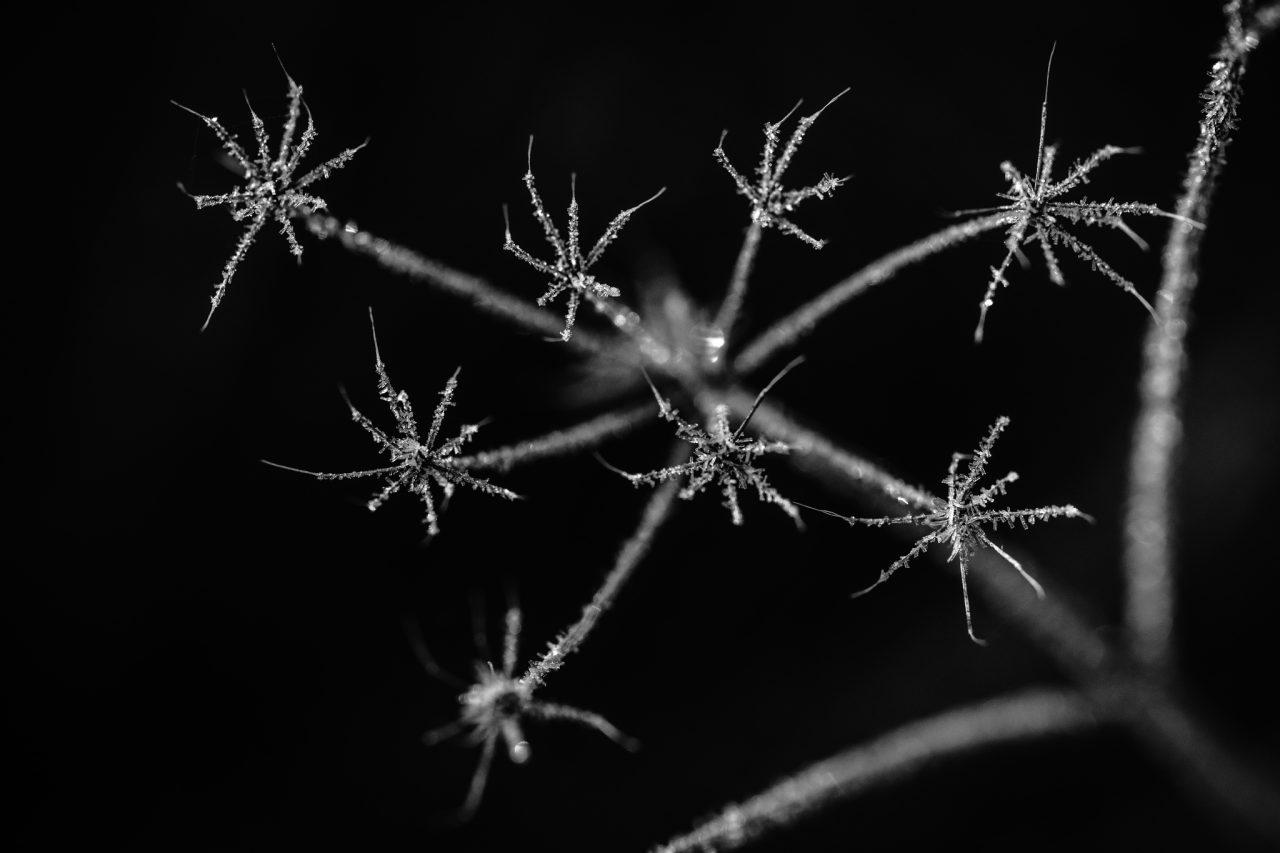
Winter is perfect for working with composition in its purest form. Ice and snow often create natural lines—cracks, crust edges, gentle slopes of snowdrifts, or circular layers in frozen puddles. These shapes can guide the viewer’s eye through the frame. In winter, less is more. With fewer distractions, a clean background lets you build simple, minimalist compositions that emphasize a single detail.
Winter’s muted color palette is an advantage. Images appear naturally harmonious. You can lean into cool blue morning tones or contrast them with the warm glow of low afternoon sun.
Winter subjects
Now that we’ve covered composition, here’s where to find winter details:
- Droplets and ice crystals: on twigs, grass, car windows, or even in bird tracks. Early morning is best, when everything sparkles, and the sun hasn’t melted the ice yet.
- Frost on glass: bus stop windows, greenhouses, and old doors often grow delicate “ice flowers.” They appear when the air is humid, and temperatures sit just below freezing—ideally early in the morning.
- Dry plants and seed pods: grasses, thistles, and dried flowers look completely different when coated with frost. Look for them in fields, ditches, or meadows after a cold night.
- Snow texture: flakes, animal tracks, and tiny shadows cast by crystals. These are especially visible in low morning or late-afternoon light.
- Ice bubbles: in frozen puddles, along stream edges, or in thin ice meadows. They shine most in backlight, where cracks stand out beautifully.


Frost can transform a simple scene into something almost abstract. Taken with a compact camera using film-grain mode. f/2.8, 1/400s, ISO 1600, 6mm.
What if there’s no snow?
In many cities, snow lasts only a few days, totaling a week or two for the entire winter. What then? Do you have to head to the mountains for macro photography? Not at all. Winter macro photography doesn’t need snow cover. It needs cold, humidity, light, and small details that appear even in “non-winter” urban settings.
After rain or during thaw, a whole new world of droplets appears—on fences, bushes, car windows, and moss in city parks. In low winter light, they produce beautiful reflections and soft bokeh, even when there isn’t a single snowflake.
When it’s frosty, pay attention to hard surfaces: railings, benches, walls, pavements. Frost creates thin crystals on them, which photograph just as well as ice textures. If you prefer working with living subjects, details in bird feathers, or birds in motion work perfectly too. Hang a small feeder outside your window, fill it with seeds, and wait for the hungry visitors to arrive.


Snowless landscapes offer a neutral background similar to autumn. The delicate fibers you see are sheep’s wool. They naturally get stuck to the plants from grazing sheep nearby.
Useful winter gear
You don’t need expensive equipment for winter macro photography. A compact camera with macro mode is often enough. Light and stability matter more. A tripod or a way to prop your camera is extremely helpful. Winter light is limited, especially under cloudy skies, and when photographing details up close, even tiny movements can cause blur. A tripod lets you use long shutter speeds, keep your hands free, and hold angles you can’t maintain handheld.
A lens cloth comes in handy, since breath or frost can settle on the lens in seconds. And don’t forget gloves that let you operate the camera. Cold fingers can ruin patient work with details.
Because winter brings humidity and rapid temperature changes, protect your equipment. After returning indoors, keep the camera in its bag for a while to avoid condensation.


Sometimes you don’t have to step outside for a good winter shot. Many cats prefer staying indoors in winter. This is a great opportunity to capture quiet details from their daily life.
Light editing
Winter macro photos often look good straight from the camera. Editing is mostly about fine-tuning what winter itself offers. Brighten structures gently and apply Lights or use Clarity selectively in Zoner Studio. Ice crystals and snow texture appear more three-dimensional without looking harsh. The opposite works for shiny surfaces—sometimes simply lowering brightness is the best way to preserve fine detail in ice.


Ice formed unusual patterns in a bathtub. I intentionally reduced softness and added Contrast and Clarity for a slightly darker, more dramatic feel. f/2.8, 1/400s, ISO 100, 28mm.
Winter light can have a cool tint that can turn into a blue haze. It’s not a mistake, but it can distract from the details. Adjust White Balance or reduce blue in the shadows for a more neutral look. Or keep the blue if you like it. Winter is naturally associated with shades of blue.
One last tip: winter is excellent for black and white photography, as you may have seen in the above photos. If the colors aren’t working or the scene looks too cold, converting to black and white often reveals clean shapes, texture, and the interplay of light. A black and white series of winter details can be very powerful, even with minimal editing.


In these photos, you can see the difference between color and black and white. Both versions are good, but each has its own unique qualities. f/4, 1/160s, ISO 800, 70mm.
Macro photography is about being observant, and winter is the best time for that. So get outside and let the details surprise you.
FAQs
How do I set my camera for macro? Use a wide aperture (f/2.8–f/5.6) to separate the details from the background. Adjust shutter speed based on the light, and use a tripod or other support when possible.
Can I shoot macro without a macro lens? Yes. Compact cameras with macro mode and phones with a high-quality macro module can produce excellent results. Light and attention to detail matter more than gear.
How do I prevent my lens from fogging? In winter, leave your camera in its bag after moving to a warm place. When shooting outdoors, carry a cleaning cloth and avoid breathing on the lens.
When is the best time for winter macro photography? Right after dawn—frost, ice crystals, and ice bubbles often disappear quickly. The afternoon is great for warm reflections and bokeh.
Can I shoot winter macro without snow? Absolutely. Raindrops, frost on metal, patterns on car windows, and moisture all make great macro subjects, even in the city.
Is it better to shoot in color or black and white? Both work well. Color preserves the atmosphere and warm light, while black and white emphasizes shape and texture. Try both and see which works best for your shot.

There are no comments yet.