

Nighttime City Portraits: Storefronts, Neon Lights, and Flash in Real-Life Situations
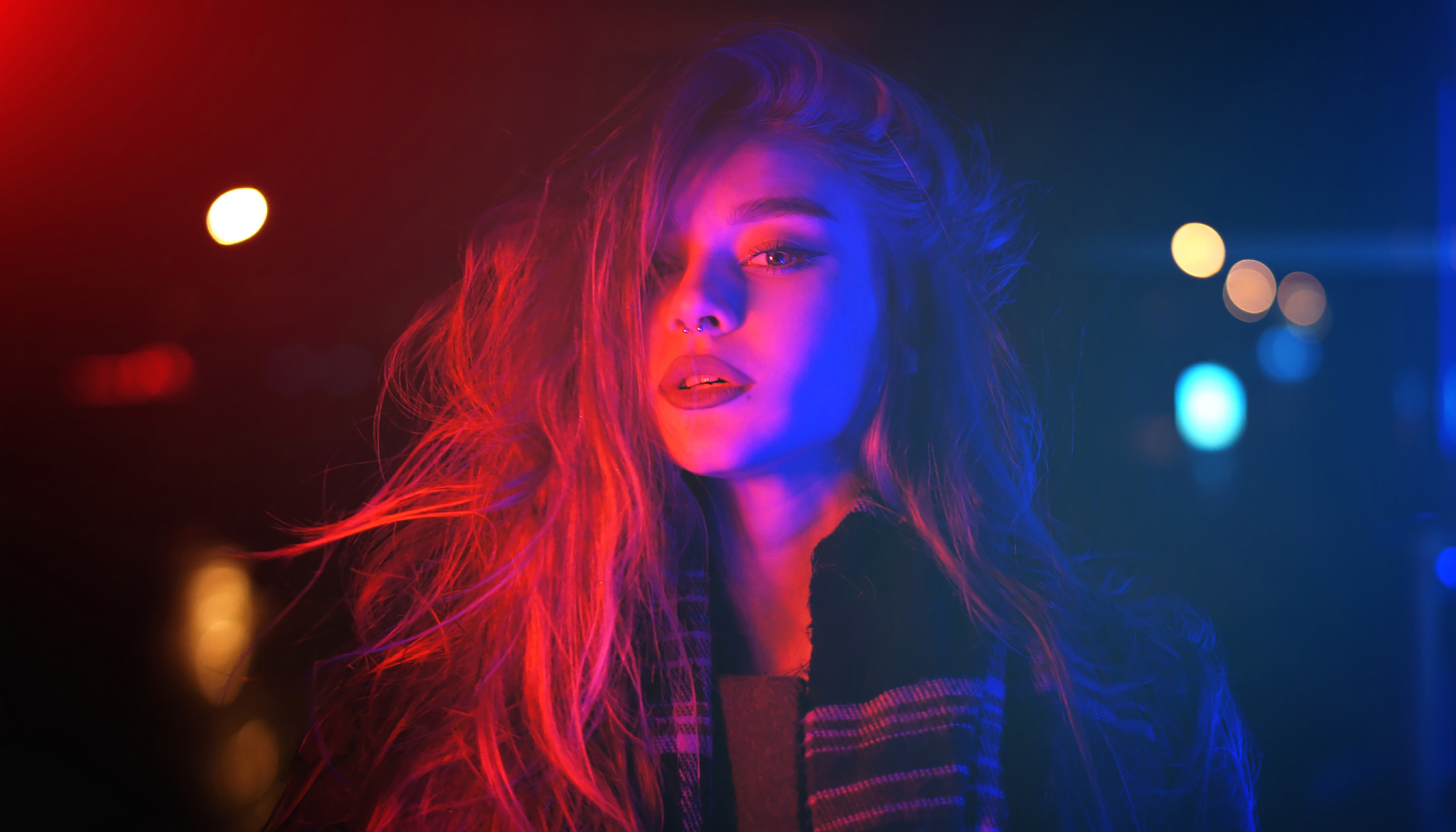
Nighttime portraits in the city offer the perfect combination of atmosphere, colors, and light you won’t find during the day. Learn how to use street lighting, storefronts, light trails, and flash to capture striking portraits at night—without complicated gear.
In this article, you’ll learn:
- How to shoot nighttime portraits in the city.
- How to use streetlights, neon lights, and storefronts.
- How to create light trails using long exposures.
- How to light portraits outdoors using flash.
- How to shoot in the rain, fog, or challenging weather.
In May, the nights are warmer, so why not take advantage of them for photography. Many photographers avoid shooting at night because of the lack of light. But in reality in the city, you’re not shooting in the dark—you’re looking for opportunities where light behaves completely differently than during the day and often looks more striking. Let’s break down a few basic scenarios that come in handy when shooting nighttime portraits.
Nighttime portraits with city lights
Streetlamps, storefronts, and neon signs are the easiest way to get into nighttime photography. When shooting a portrait, use a lit storefront as if it were a giant softbox. Then find an angle where illuminated objects in the background also stand out. Pay attention to the color temperature of different light sources. The city is full of color contrasts—cool blues against warm oranges. It would be a shame not to make use of them.

Choosing the right location is more important than technique. Look for scenes where light intersects and creates a certain mood. Feel free to shoot handheld if there’s enough light. Night scenes often look best with a wide-open aperture. You just have to accept that ISO will be a bit higher.


TIP: The longest shutter speed you can use handheld is roughly the reciprocal of the focal length (e.g., 50 mm is about 1/50 s). With crop sensor cameras, adjust the focal length accordingly. The actual limit also depends on image stabilization, your technique, and how steady your hands are.
Long exposures and city light trails
Light painting in the city? Yes—especially when the light paints itself. Passing cars or buses leave light trails in your image. In this case, shutter speed is key—the longer the exposure, the longer the light trails will be.
Anything that moves and has light works well: cars, trams, or even subway trains. It doesn’t have to be straight motion—curves can look even more interesting.

Mount your camera on a tripod (or use a bench or a low wall). Set a slower shutter speed depending on how fast the vehicles are moving and how long you want the trails to be. This can range from 1/30 s to several seconds. If you’re including a portrait at the same time, your model needs to remain completely still throughout the exposure to avoid blur.

TIP: You can use light trails as a background or even in the foreground of a portrait. If they’re in the foreground, make sure your model is lit by a stronger light source than the passing headlights—otherwise, they disappear in the shot.
How to light a nighttime portrait using flash outdoors
Taking portraits in the dark is easier than it seems—all you need is a single light source. You can either use available city light or bring your own. A small external flash with a remote trigger works great. Mount the flash on a monopod and raise it above the model’s head to position the light exactly where you need it. If you have multiple flashes, you can create a scene with a studio-like look and the backdrop of the city at night.

If you need softer light and don’t have an umbrella or softbox, aim the flash at a light-colored wall so the reflection falls on your model’s face. The result is soft, natural-looking light.

TIP: Be careful not to overdo flash power! Adjust it to match the scene so the nighttime cityscape doesn’t get lost. That’s why it’s often better to skip TTL mode and set the flash output manually.
Nighttime portraits in fog, rain, and smoke
Many photographers avoid shooting in the rain, but that’s often when the magic happens. Light isn’t just on your subject, but it’s also visible in the air. Fog or rain scatter light into visible beams of light. Silhouettes work especially well here—details matter less than shape. Dense air combined with light creates a strong mood.
You can create a striking scene using backlighting. Position your subject with their back to the light source and photograph their silhouette. The light can come from a flash, a flashlight on a tripod, or even car headlights.

Portraits in the rain can also feel romantic. For example, wrap a string of lights around an umbrella, or place an external flash in the same hand holding it. The light bounces off the umbrella and returns as soft, diffused light. Just be careful not to use too much flash power.

FAQs
What shutter speed should I use for handheld nighttime portraits?
It depends on focal length—generally about 1/focal length—but at night, it’s often best to use a faster shutter speed and raise ISO.
Do I need a tripod for night photography in the city?
Not usually for portraits, but it’s very useful for light trails and long exposures.
How should I set ISO at night?
High enough for proper exposure—modern cameras can handle ISO 3200–6400.
How do I avoid blurry portraits at night?
Use flash, faster shutter speeds, or a stable support.
What type of flash is suitable for outdoor portraits?
An external flash with a remote trigger works best.

There are no comments yet.